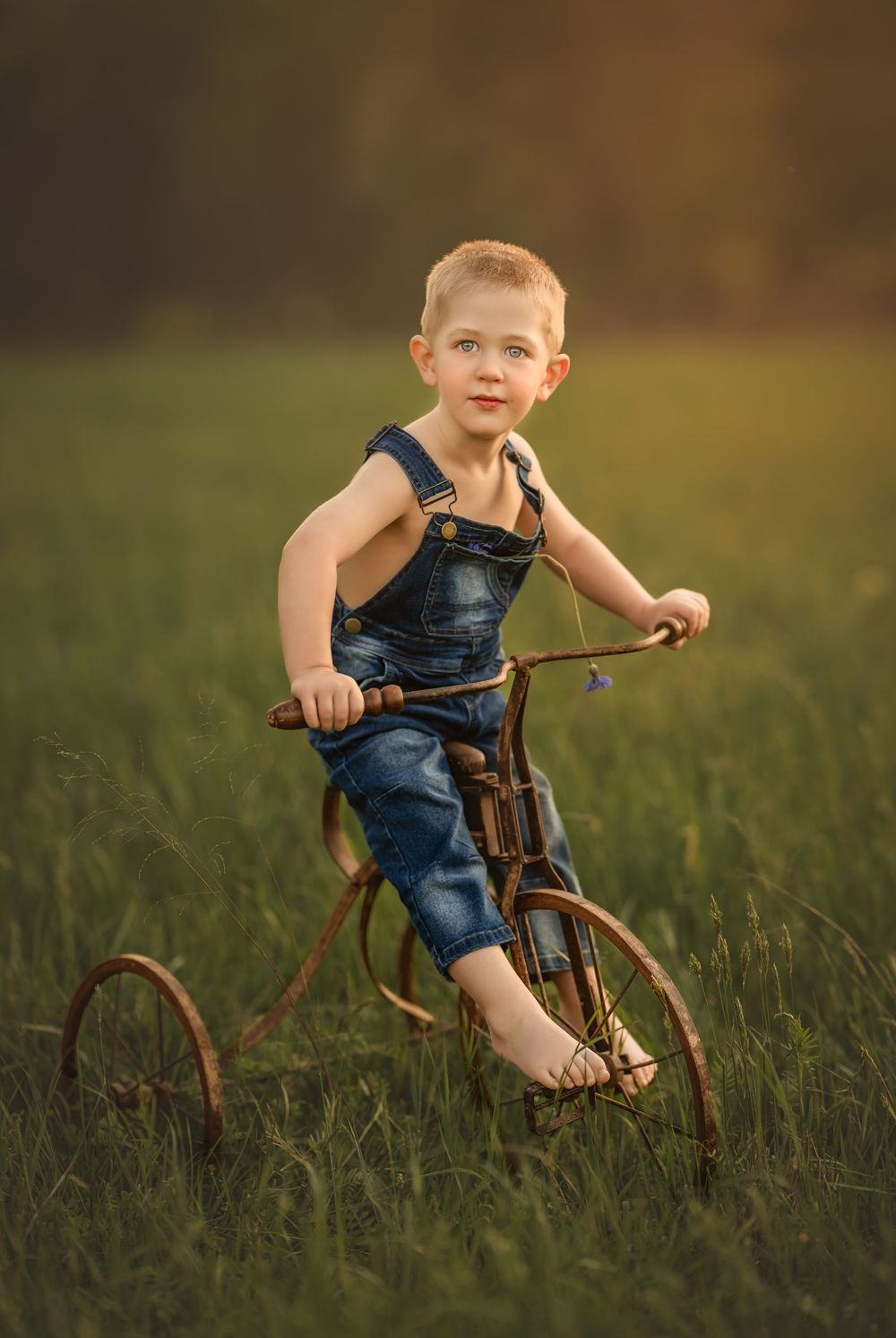
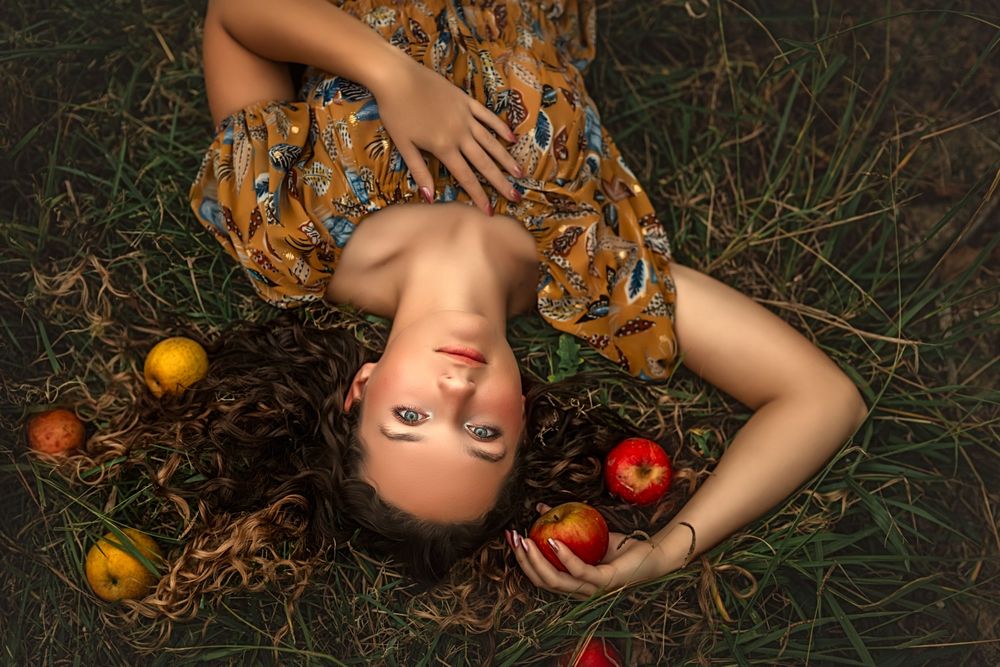
Fine art children’s photography in Marietta is about more than creating a beautiful picture of your child. It is the process of making intentional choices about light, clothing, setting, expression, composition, and finishing to create a portrait with presence, and ideally one designed to be enjoyed as artwork for years to come. In my work as a Marietta fine art children’s photographer, I guide each of those choices while leaving room for the personality that makes your child unmistakably themselves. It is a process that begins long before I press the shutter.
It Begins With an Idea
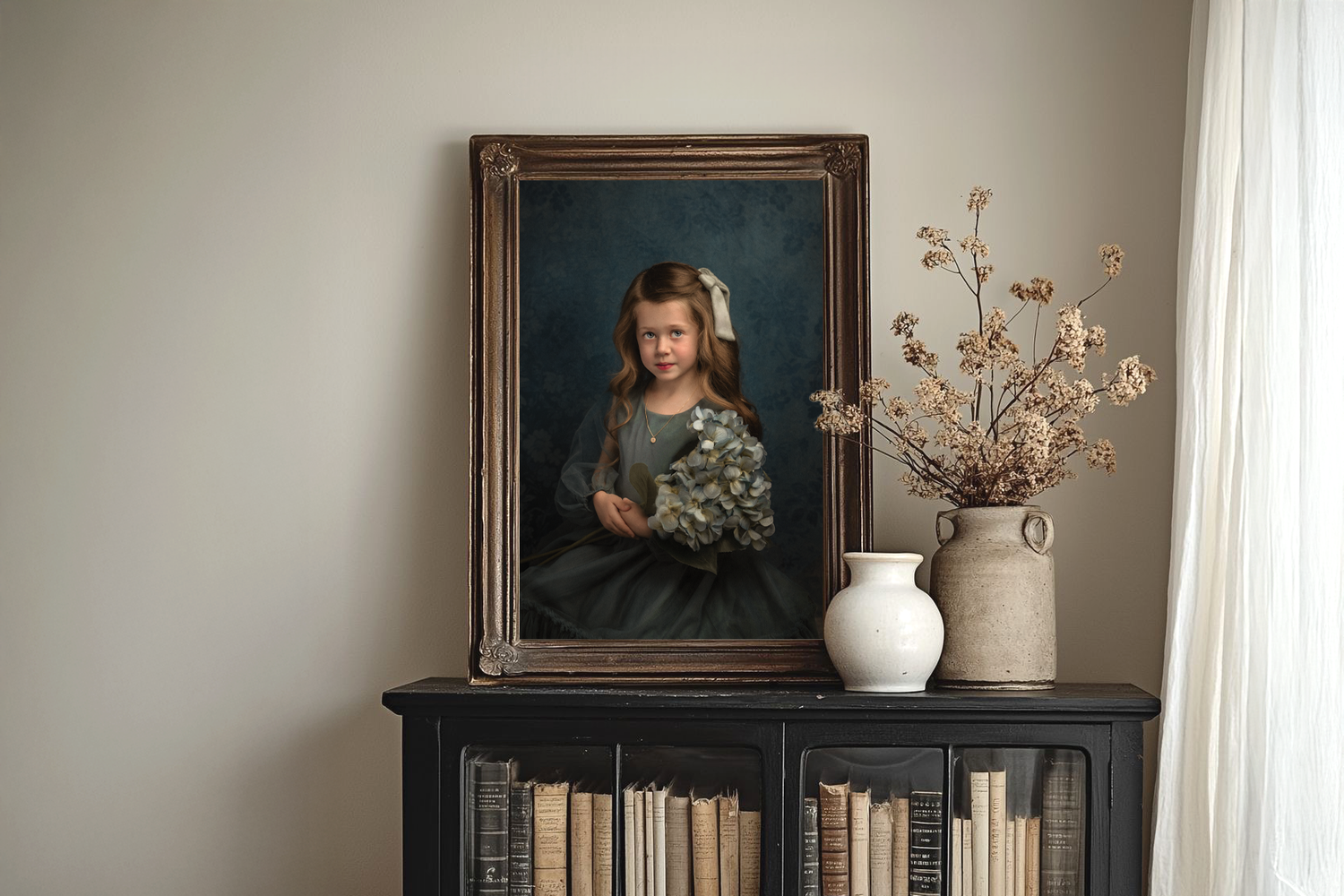
Every fine art portrait begins with a point of inspiration, and it doesn’t have to be elaborate. An idea might come from something distinctive about the child, like their eyes, freckles, curls, or heritage. It could be sparked by a favorite color, a special dress, a meaningful object, a beloved interest, or even the room where the finished portrait will eventually hang.
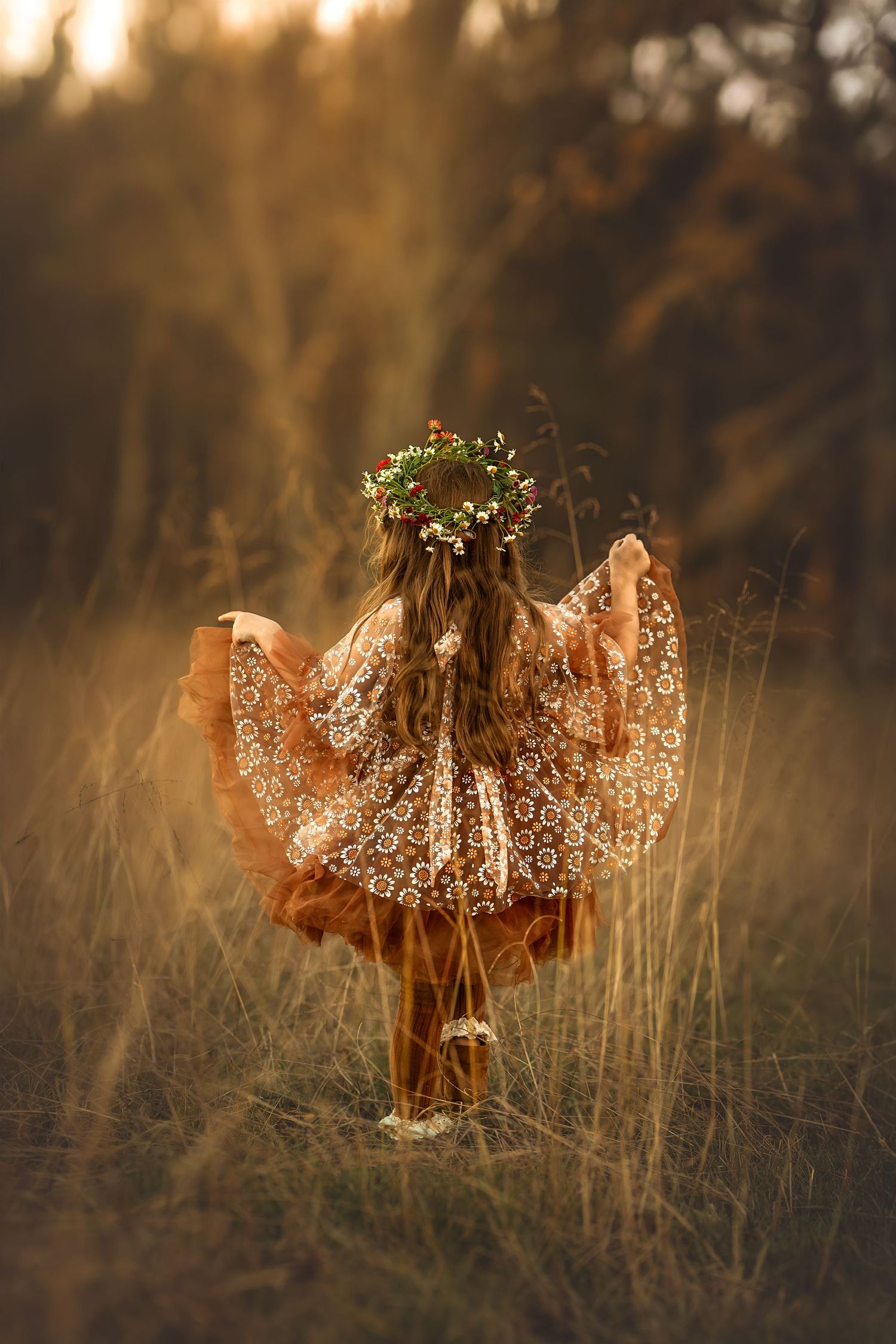
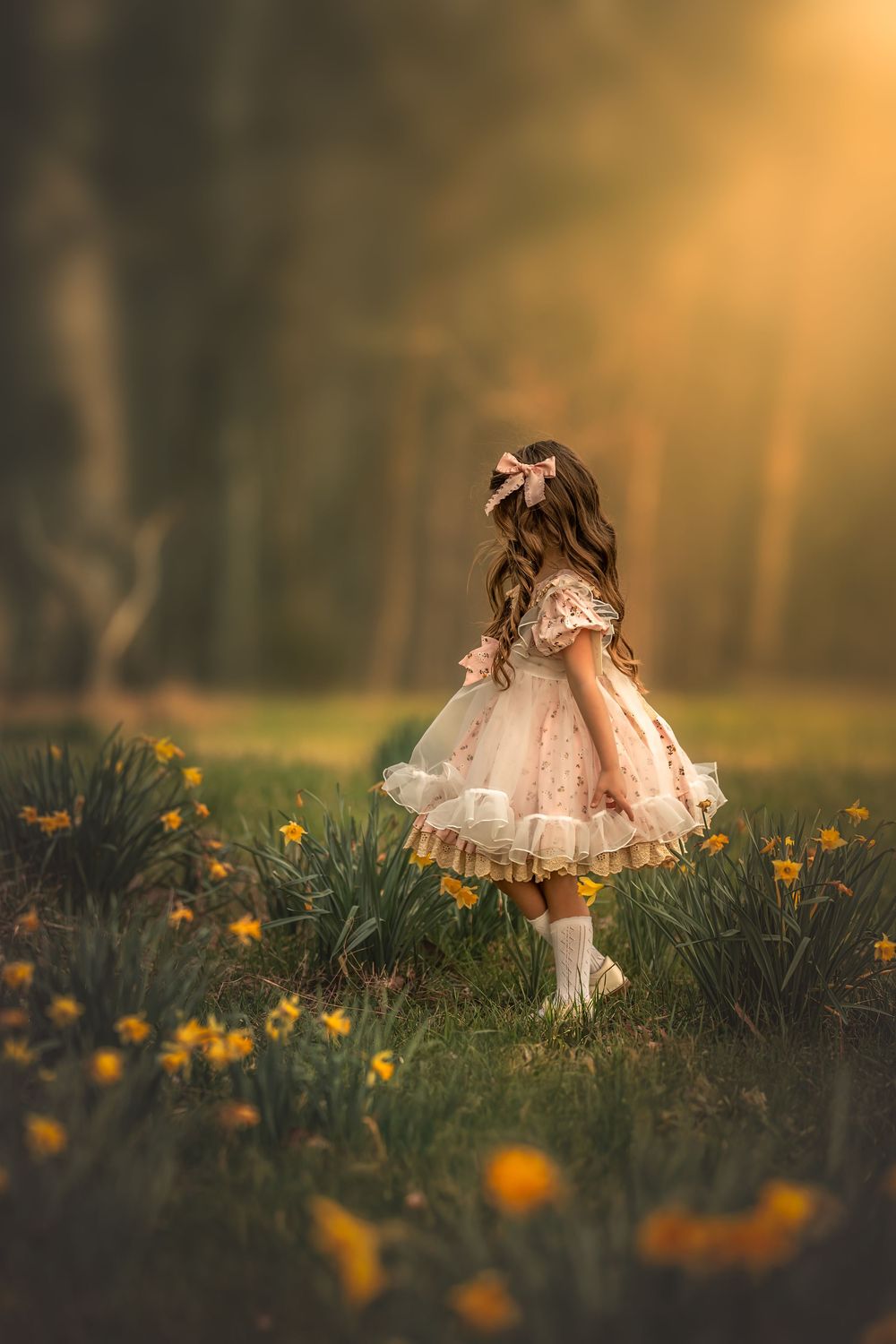
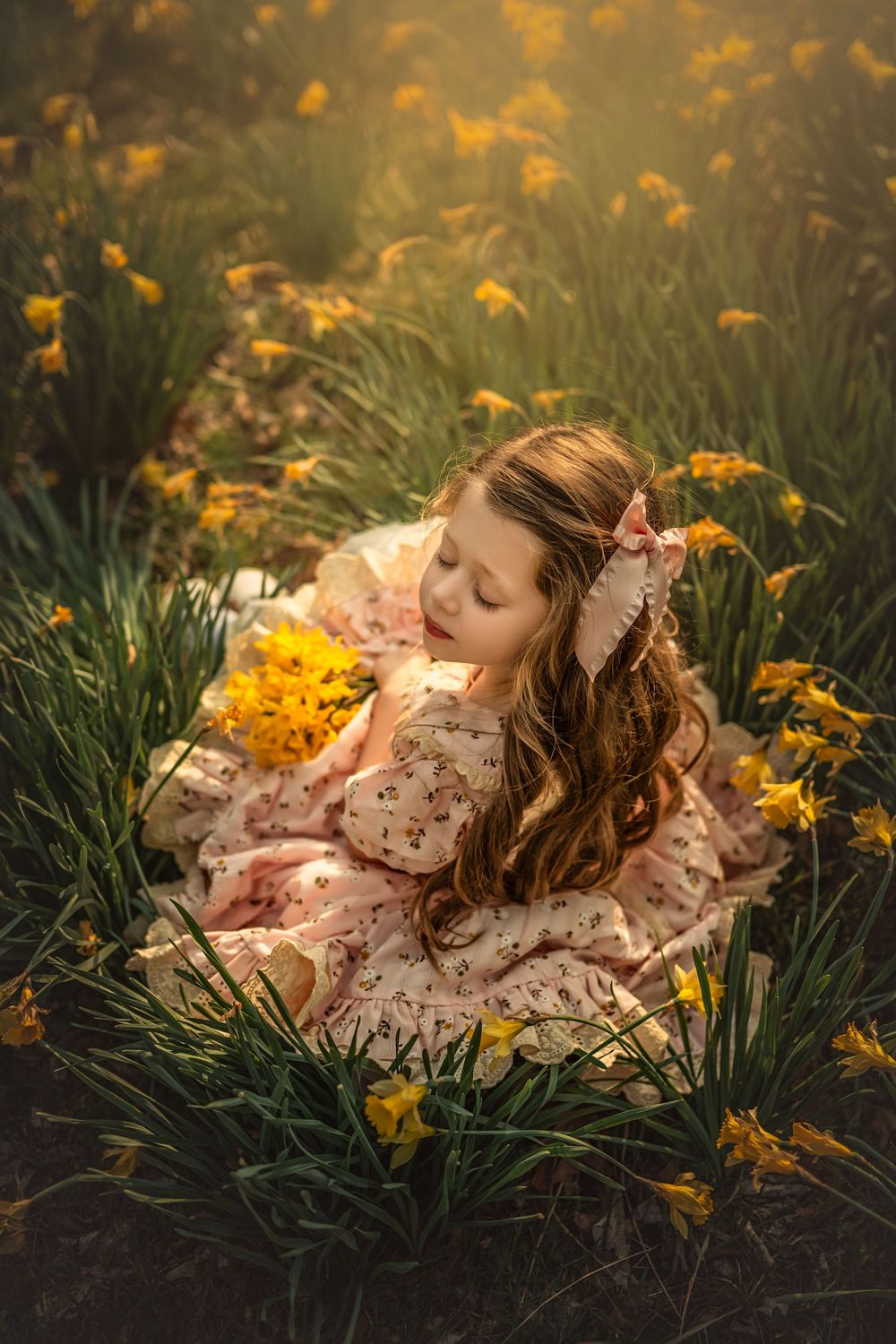
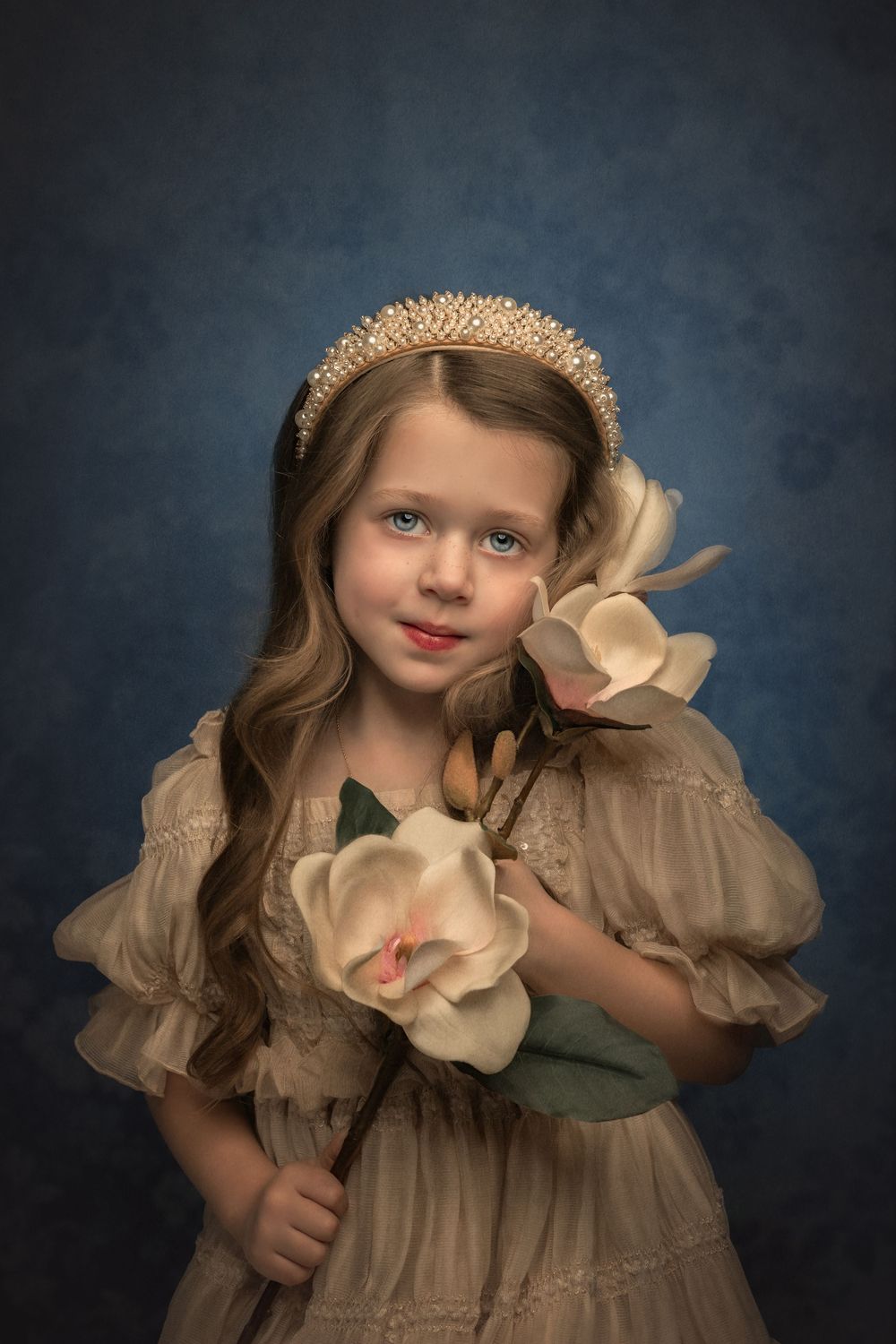
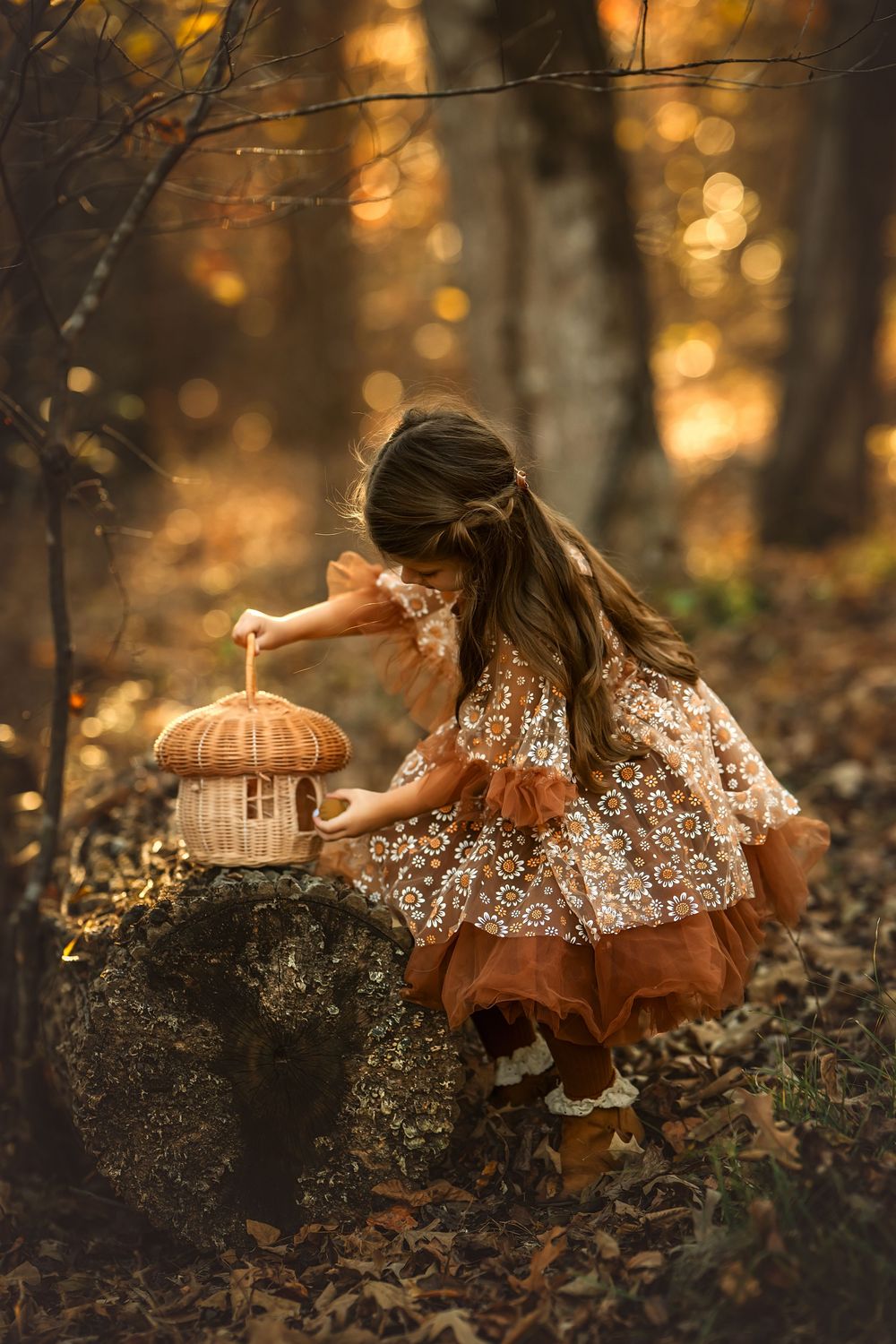
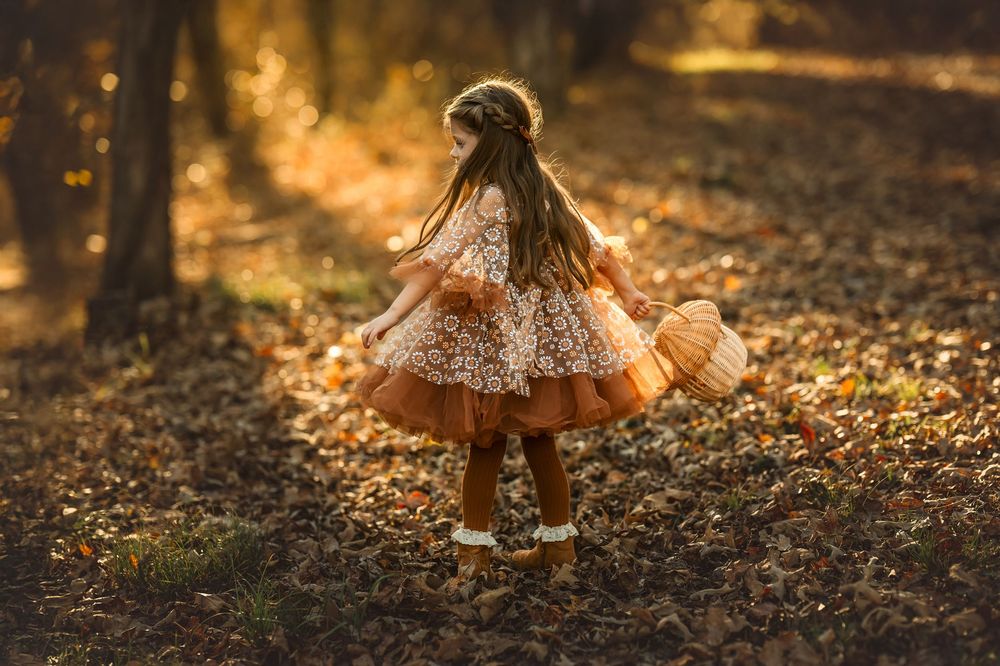
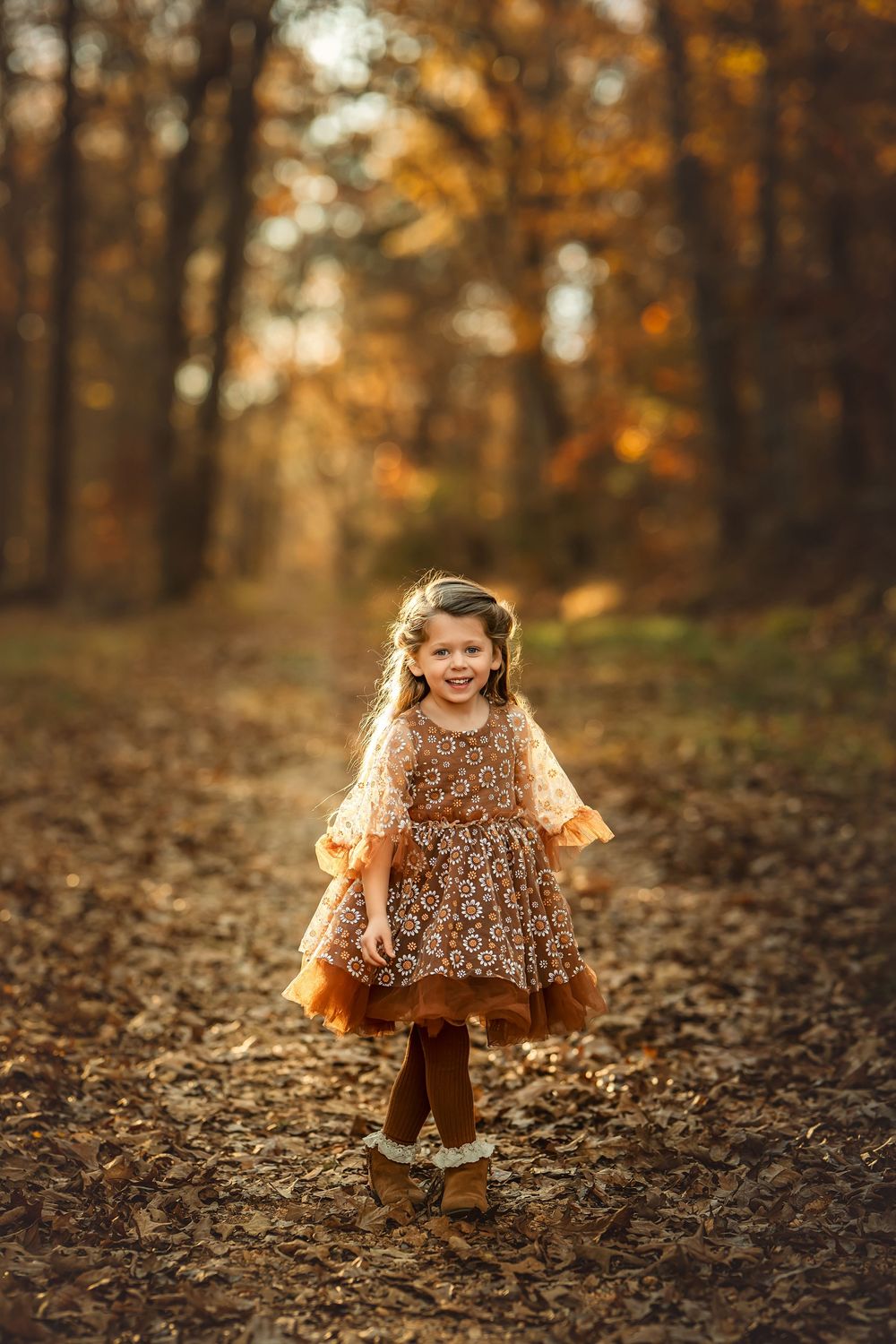
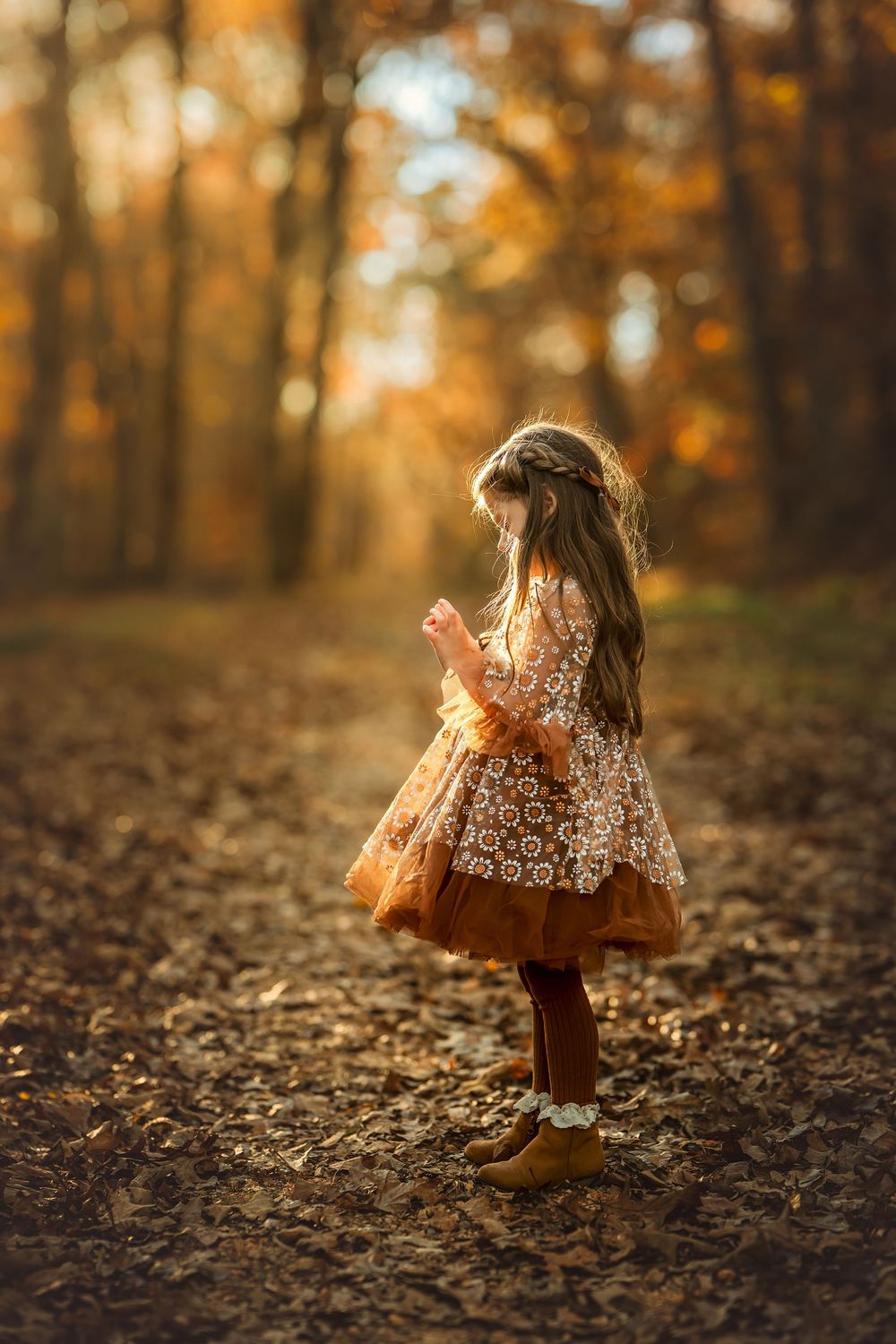
Often, one small detail is enough to shape an entire portrait. For one session with my daughter, we used blue as our theme because it complemented her eyes. For her sixth birthday portraits, we planned around daffodils because they are her birth flower. A deep umber dress covered in white daisies, paired with a tiny wicker mushroom-house purse, inspired a series in which she became a little woodland fairy wandering through the fall landscape.
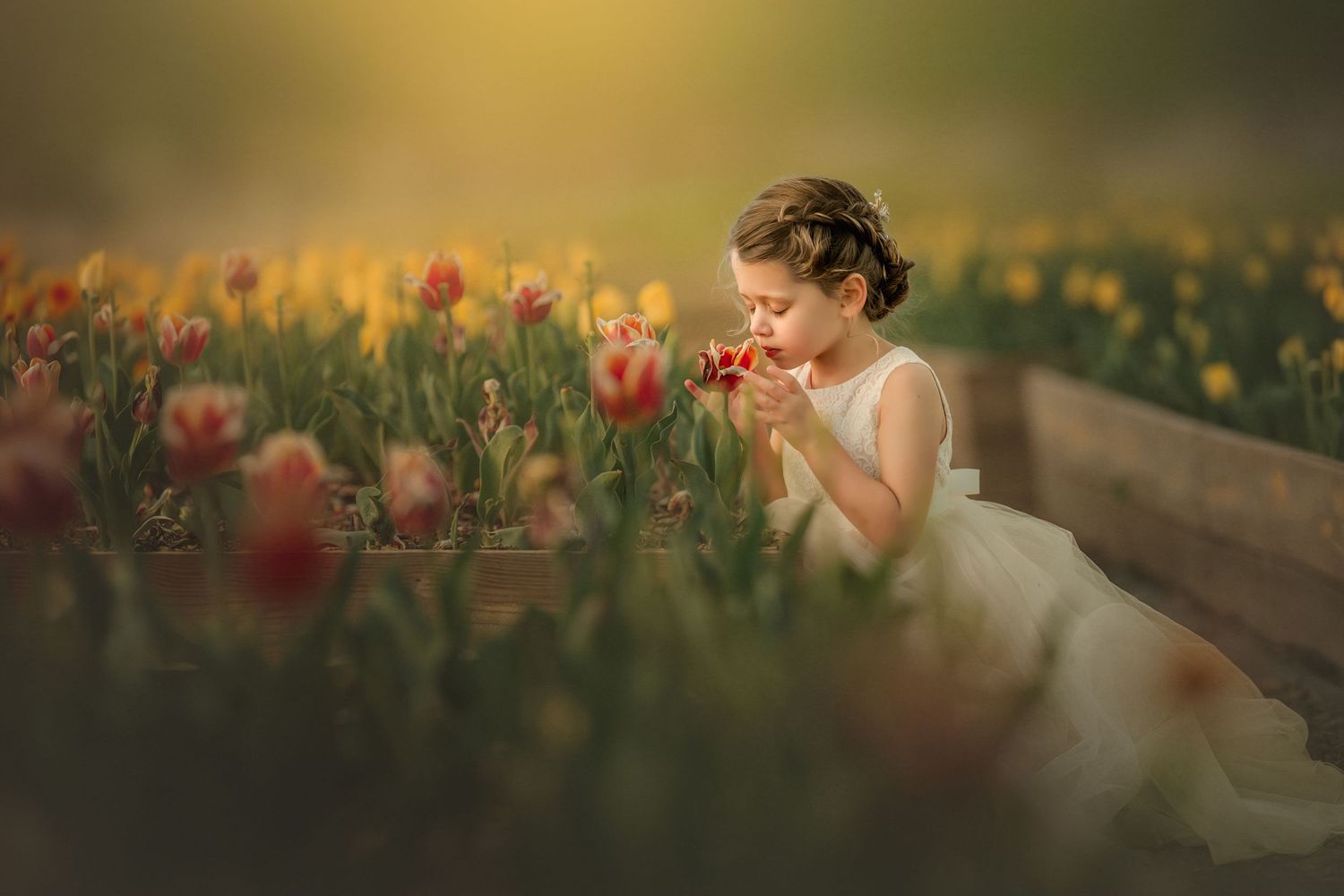
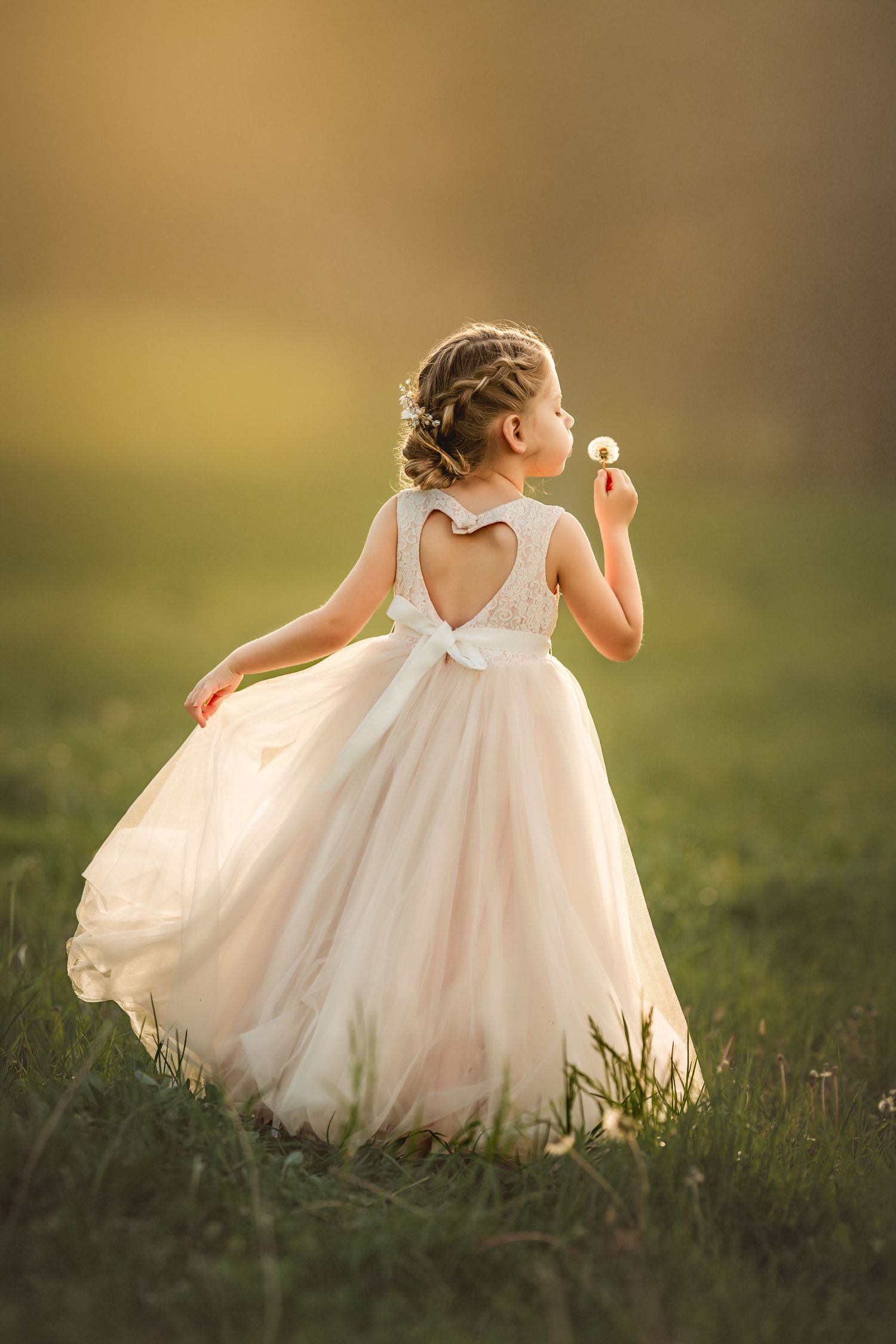
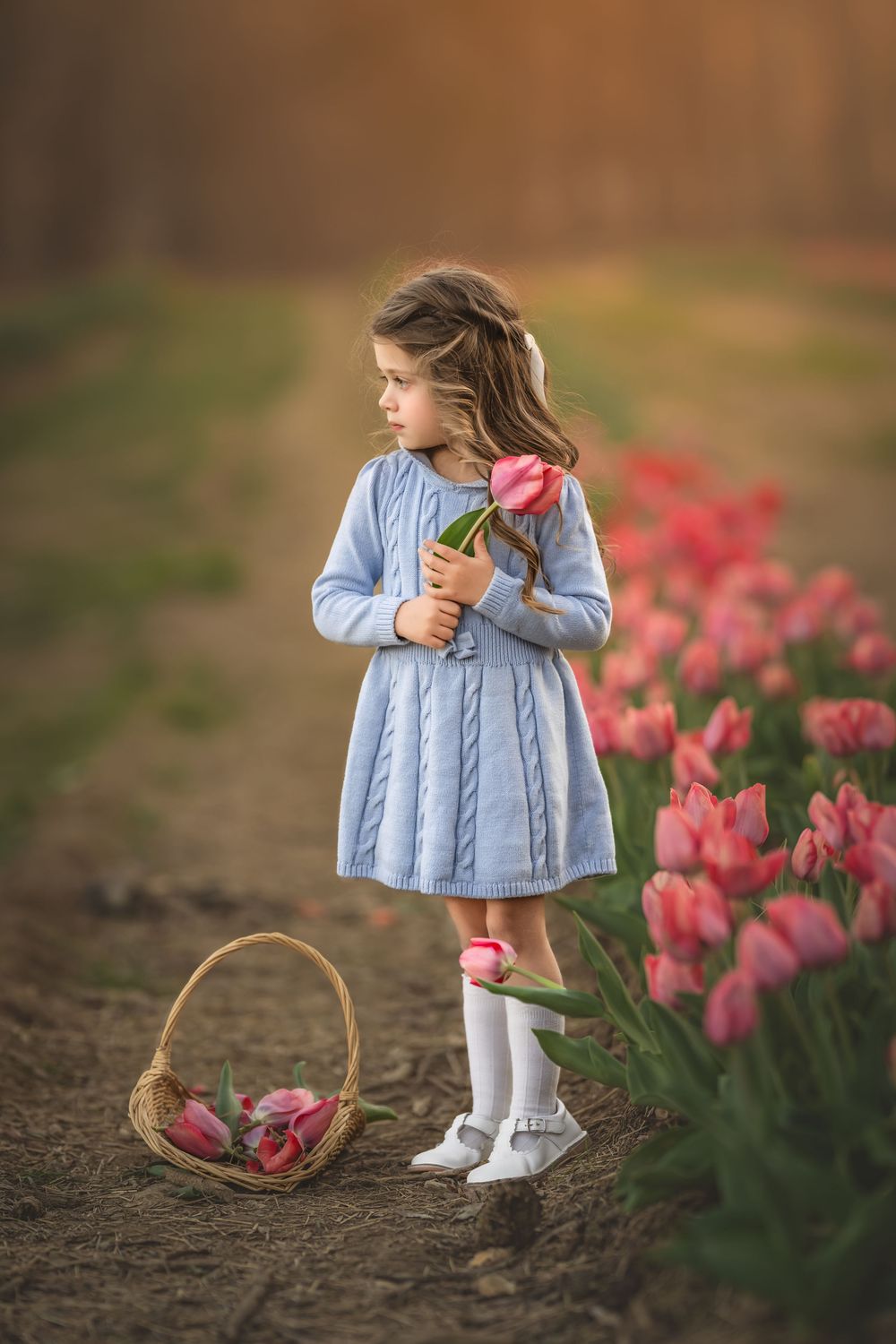
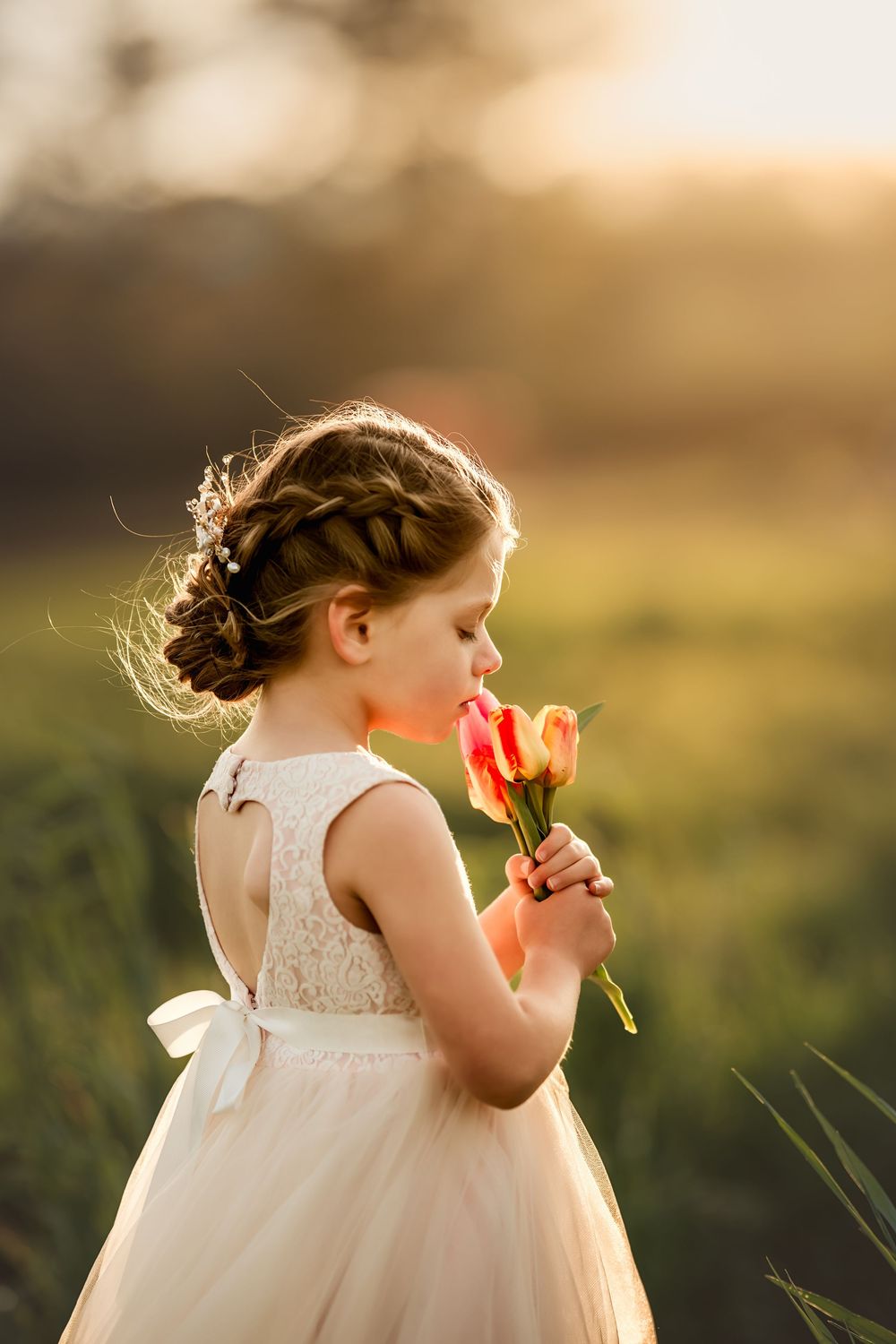
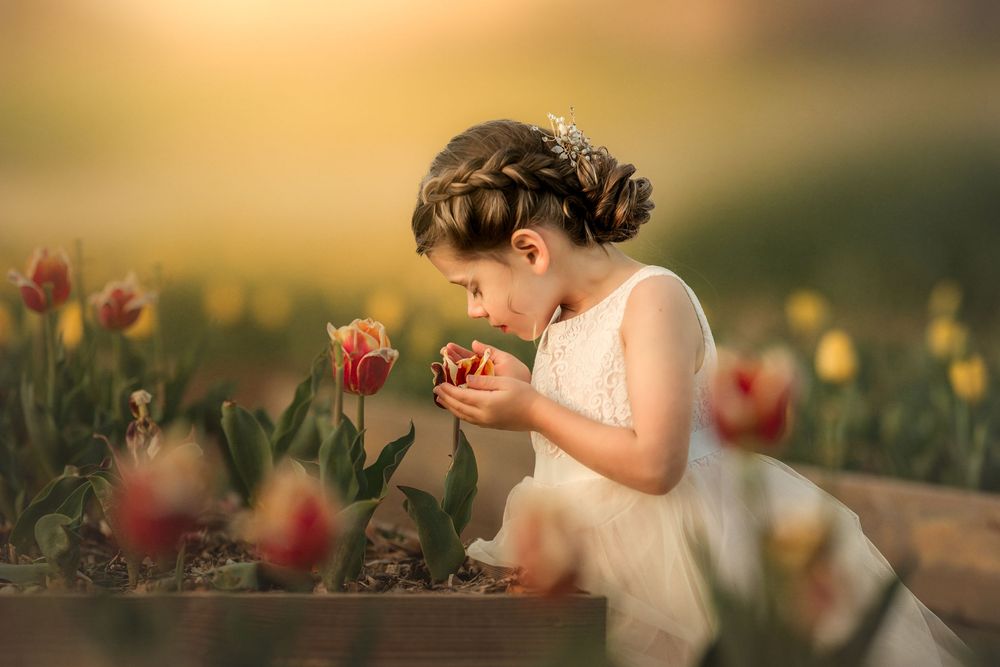
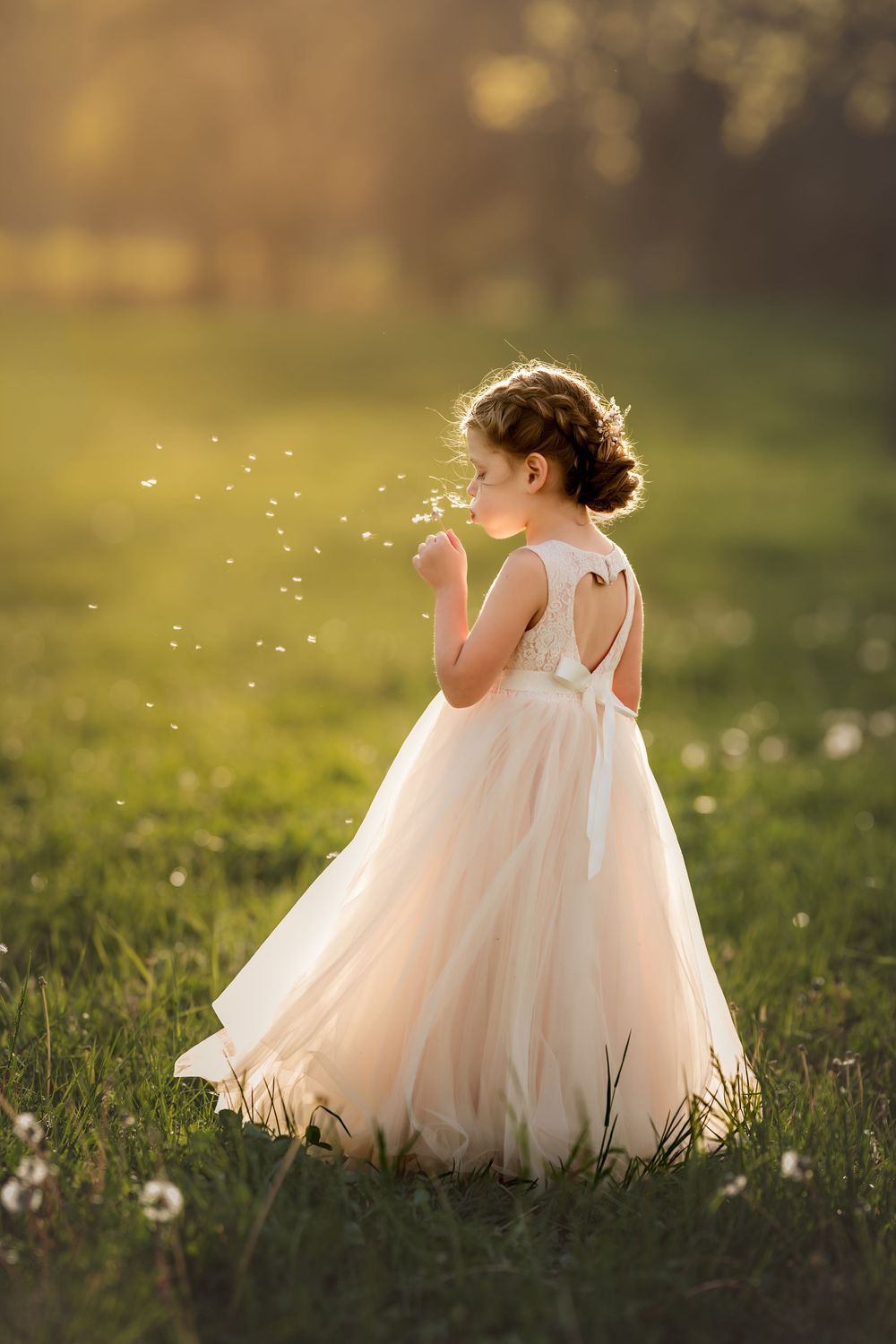
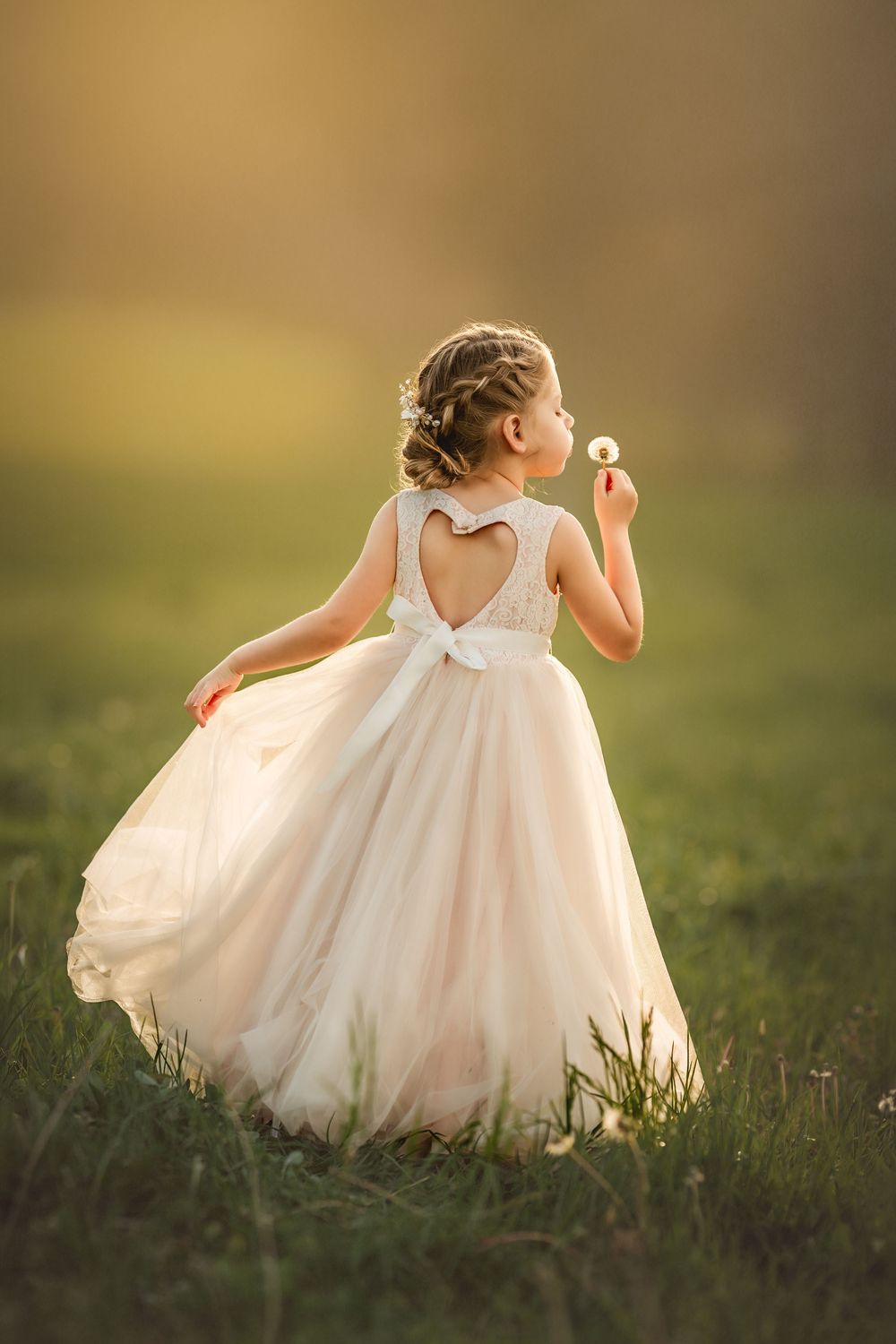
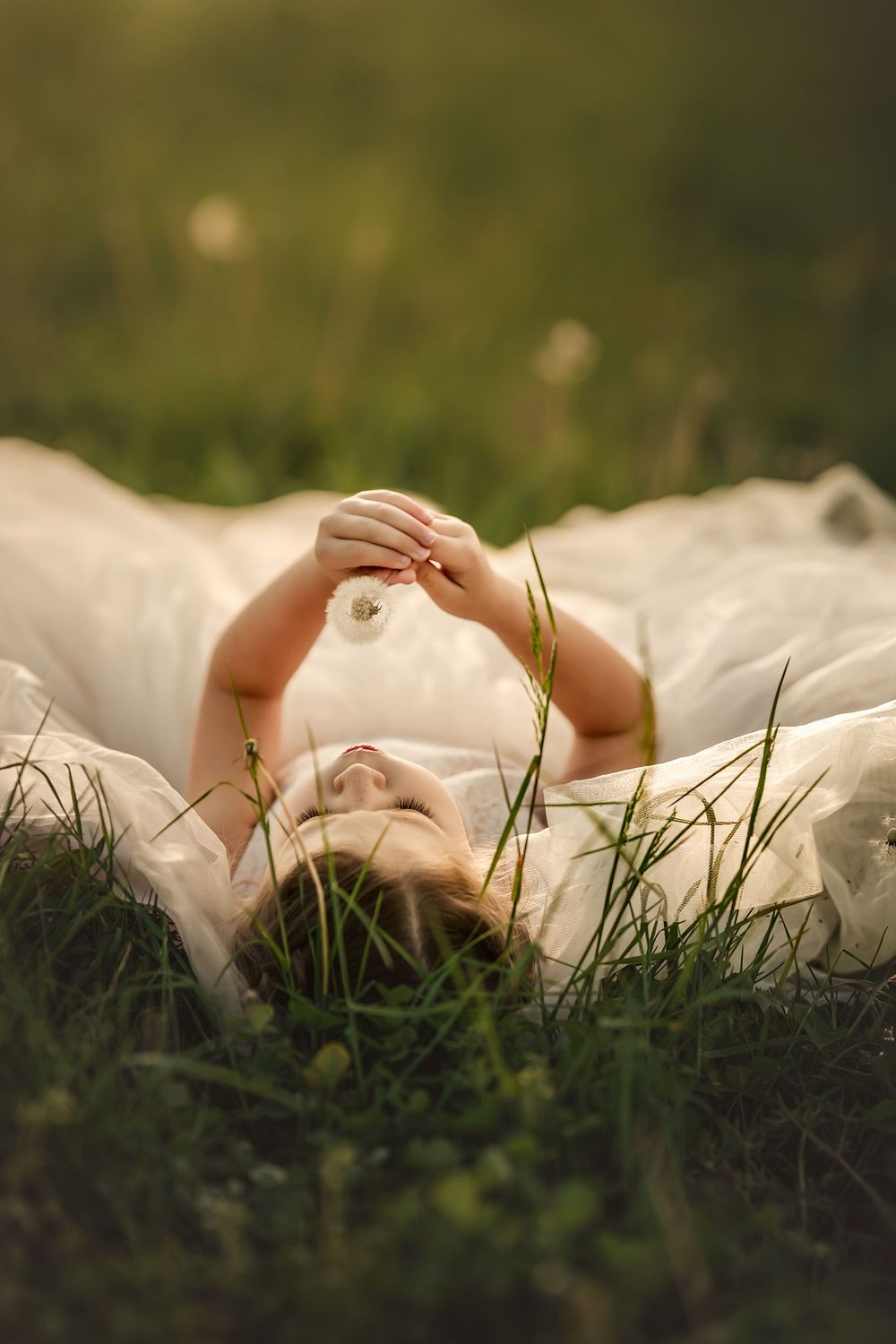
It’s not uncommon for ideas to grow into stories. Of course, a field of dandelions would include the dandelion princess, gathering flowers and blowing their seeds into the air. Among the tulips, she became the tulip princess. Imagined roles like these give your child something to participate in rather than simply asking them to stand in a beautiful place and smile. They also create memories your child can revisit each time they see the finished portraits.
Children are welcome to bring their own ideas to the process, too. My daughter suggests portraits nearly as often as I do, and we usually have several that we’re imagining at any given time. Whether the inspiration comes from the child, the parent, or something I notice while planning, nearly anything can become the beginning of a fine art children’s portrait.
The child remains the star. The clothing, setting, colors, props, and story are simply supporting characters, chosen intentionally to help us create a portrait that feels entirely their own.
Light Shapes the Way the Portrait Feels
Without light, there is no photograph. Aside from the child themselves, light may be the most important element in shaping how a portrait looks and feels. It does more than make the subject visible; it establishes the mood, directs attention, and creates dimension.
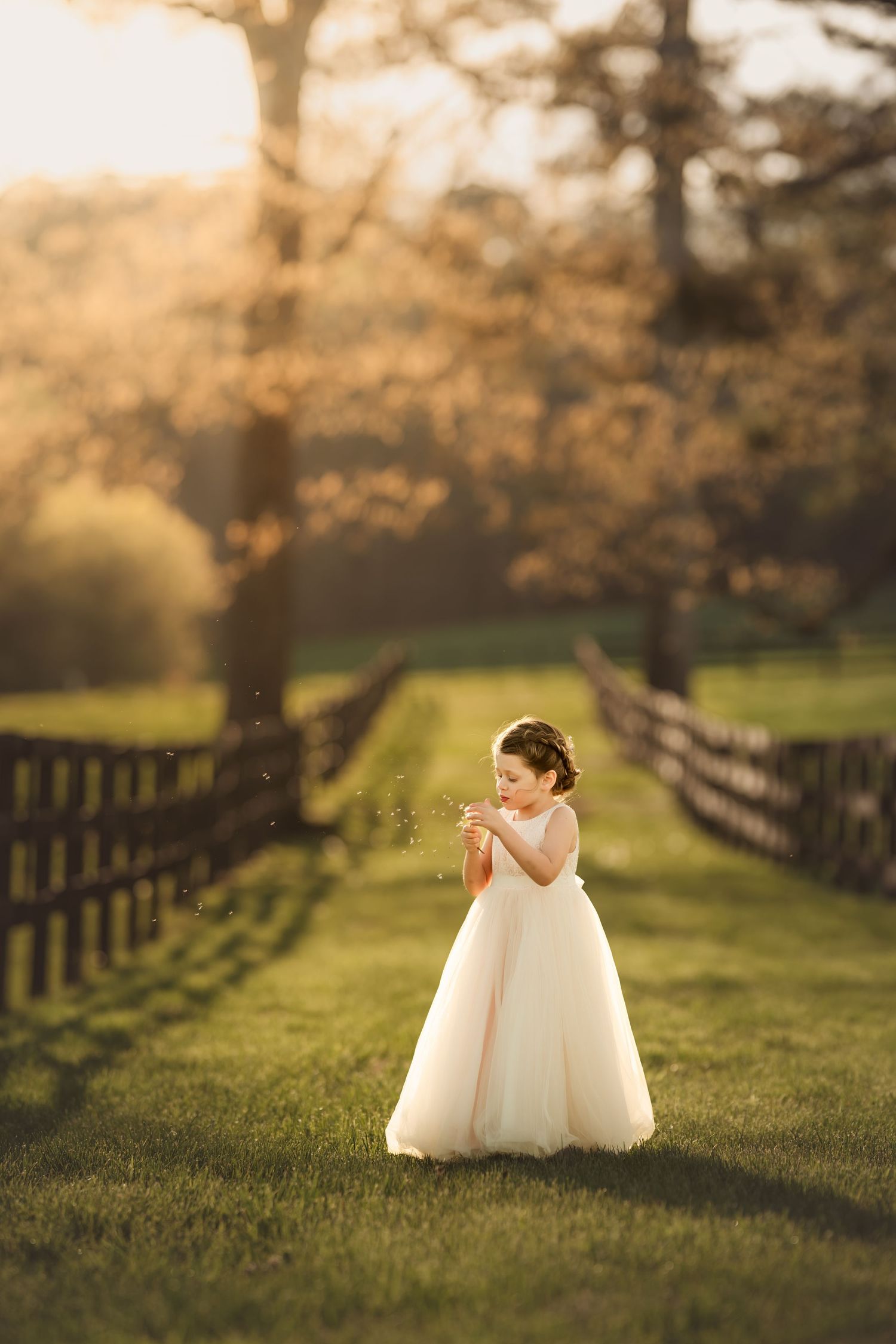
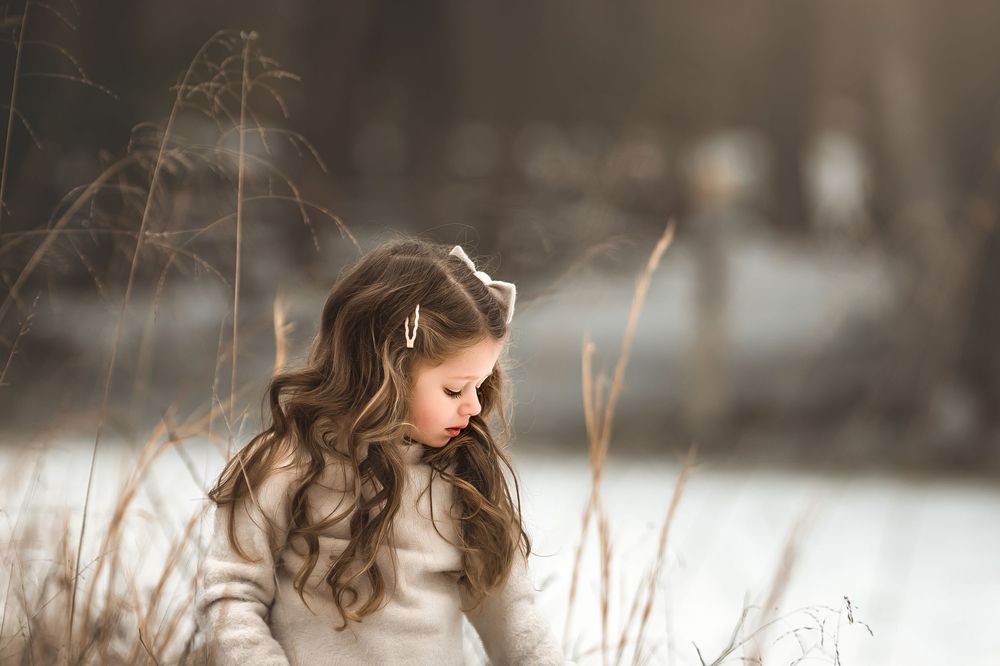
Soft light can feel gentle and quiet. Directional light can add depth and drama, while backlight can create warmth and bring a sense of movement to hair, fabric, or the landscape. Shadows are equally important. Used intentionally, they give the portrait shape and guide the viewer toward what matters most.
That remains true whether I am working entirely with natural light, combining natural and artificial light, or controlling every element inside a studio. The tools may change, but the purpose does not: the light should support the feeling we want the finished portrait to convey.
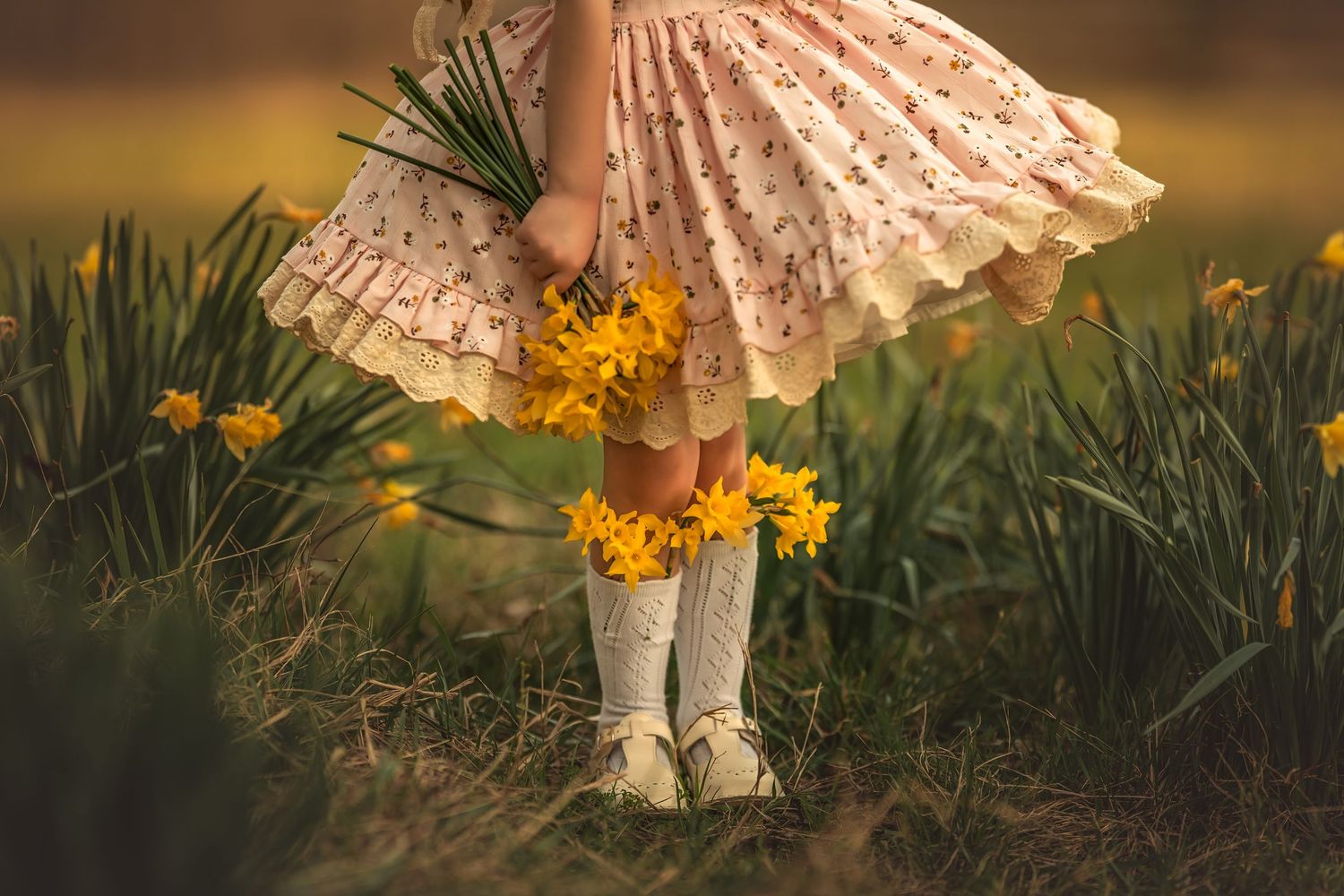
For my daughter’s daffodil portraits, we drove past the location every few days for nearly two weeks, waiting for the flowers to reach the right stage. Once they did, we waited a little longer for a day that was warm enough for her to be comfortable but still offered the cloud cover the location required. When the flowers, weather, and light finally came together, that was the day we created the portraits.
Whenever possible, I prefer to keep the date of an outdoor fine art portrait flexible enough to account for conditions like these. We cannot control the weather, but we can plan carefully and give ourselves the best opportunity to work with beautiful light.
Think about a photograph you love—whether it is a family portrait, a piece of art you have saved, or simply an image that stopped you while scrolling. Notice where the light falls, what it reveals, and what it allows to recede. The light is likely part of what drew you to that image, even if you had never consciously noticed it before.
Clothing Becomes Part of the Composition
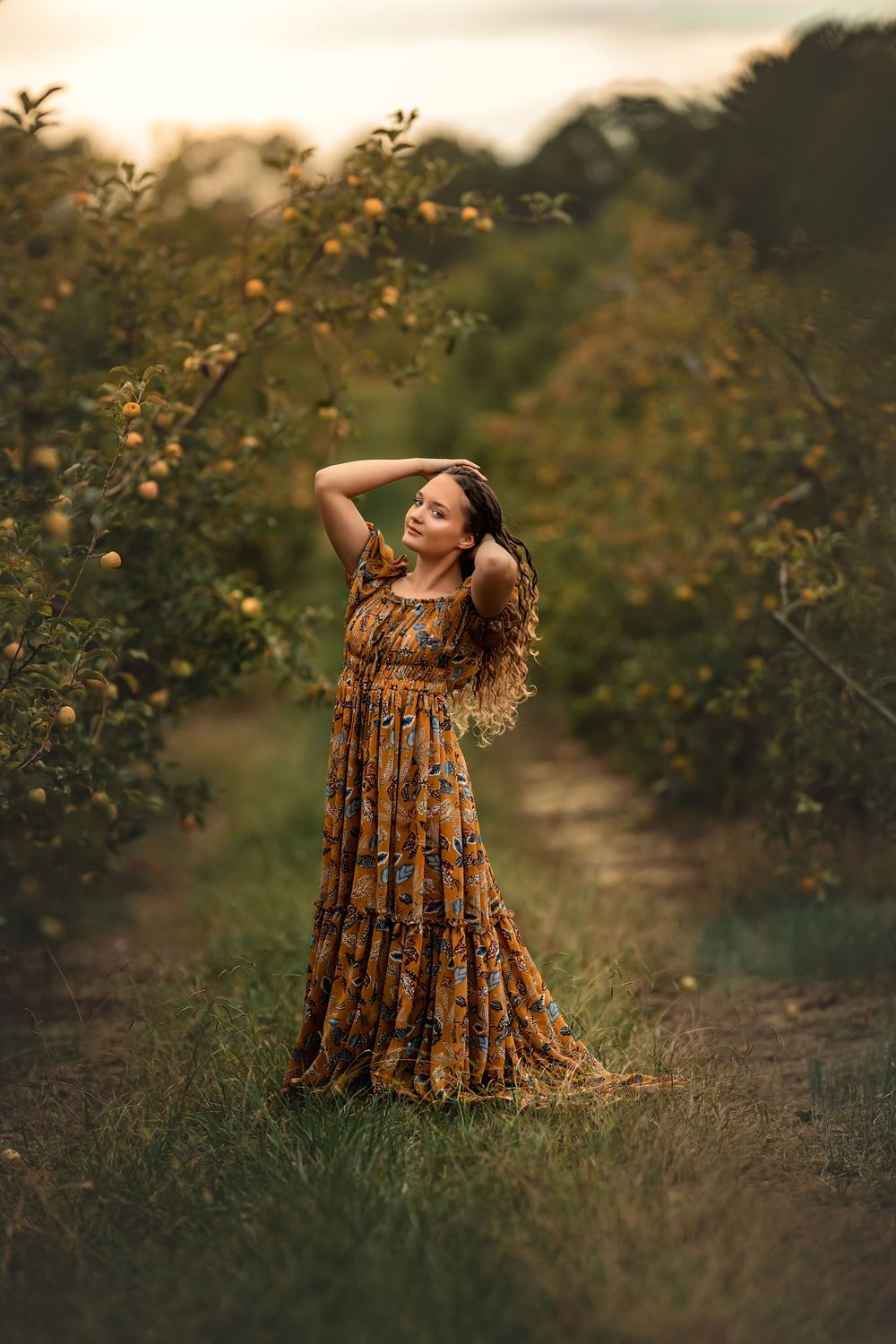
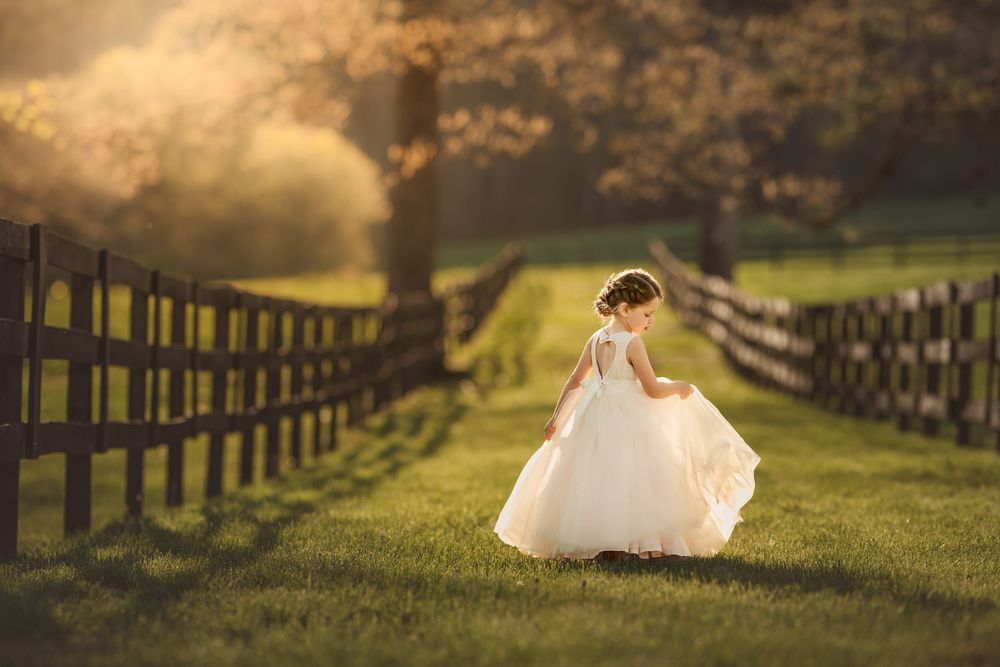
Clothing is not simply something chosen after the idea for a portrait has already been formed. It becomes part of the composition, contributing color, texture, movement, shape, and even emotional tone. A flowing dress may add softness and motion, while a structured jacket or meaningful uniform can create an entirely different sense of character. The clothing doesn’t necessarily need to be formal, but it should be chosen with intention from the beginning.
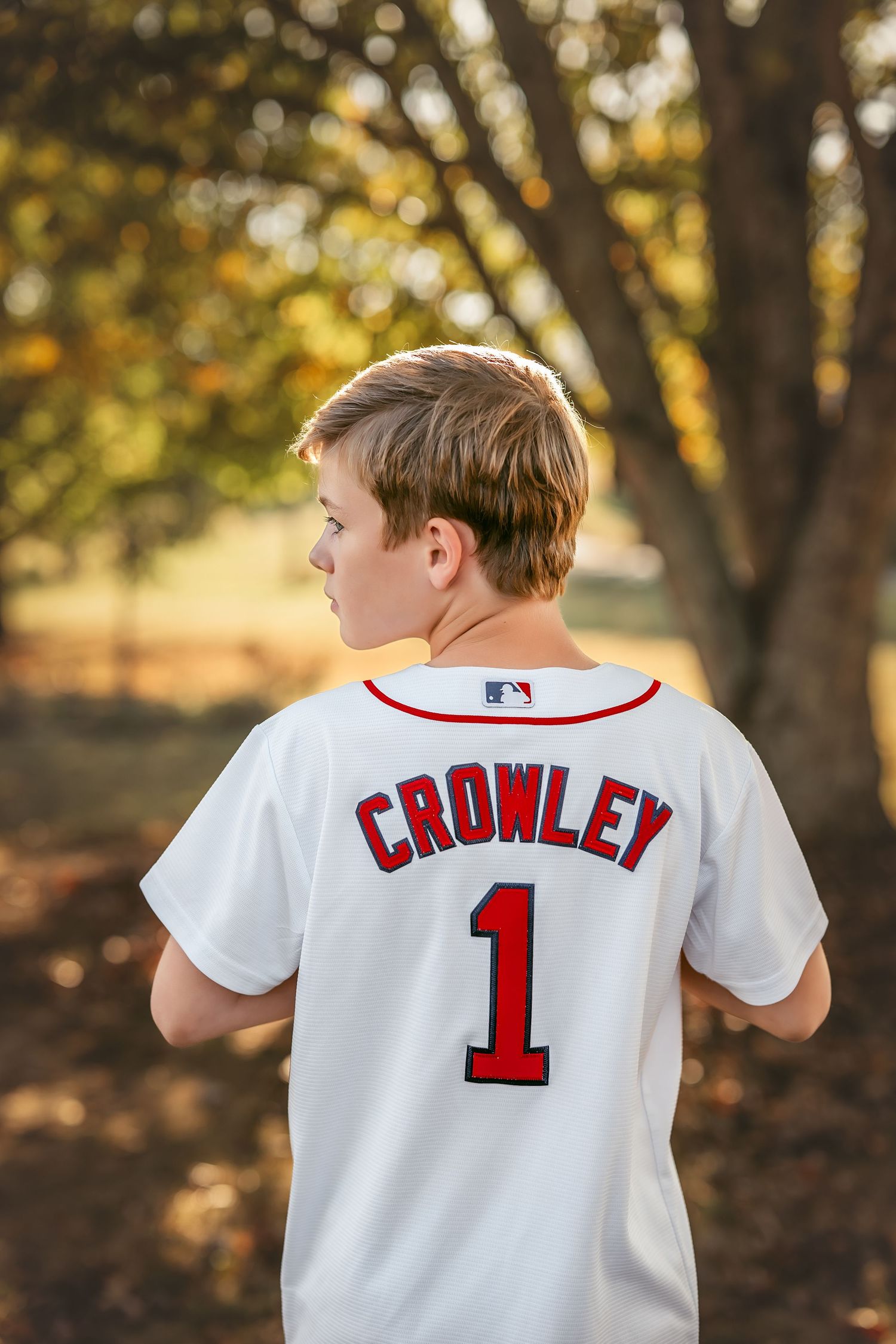
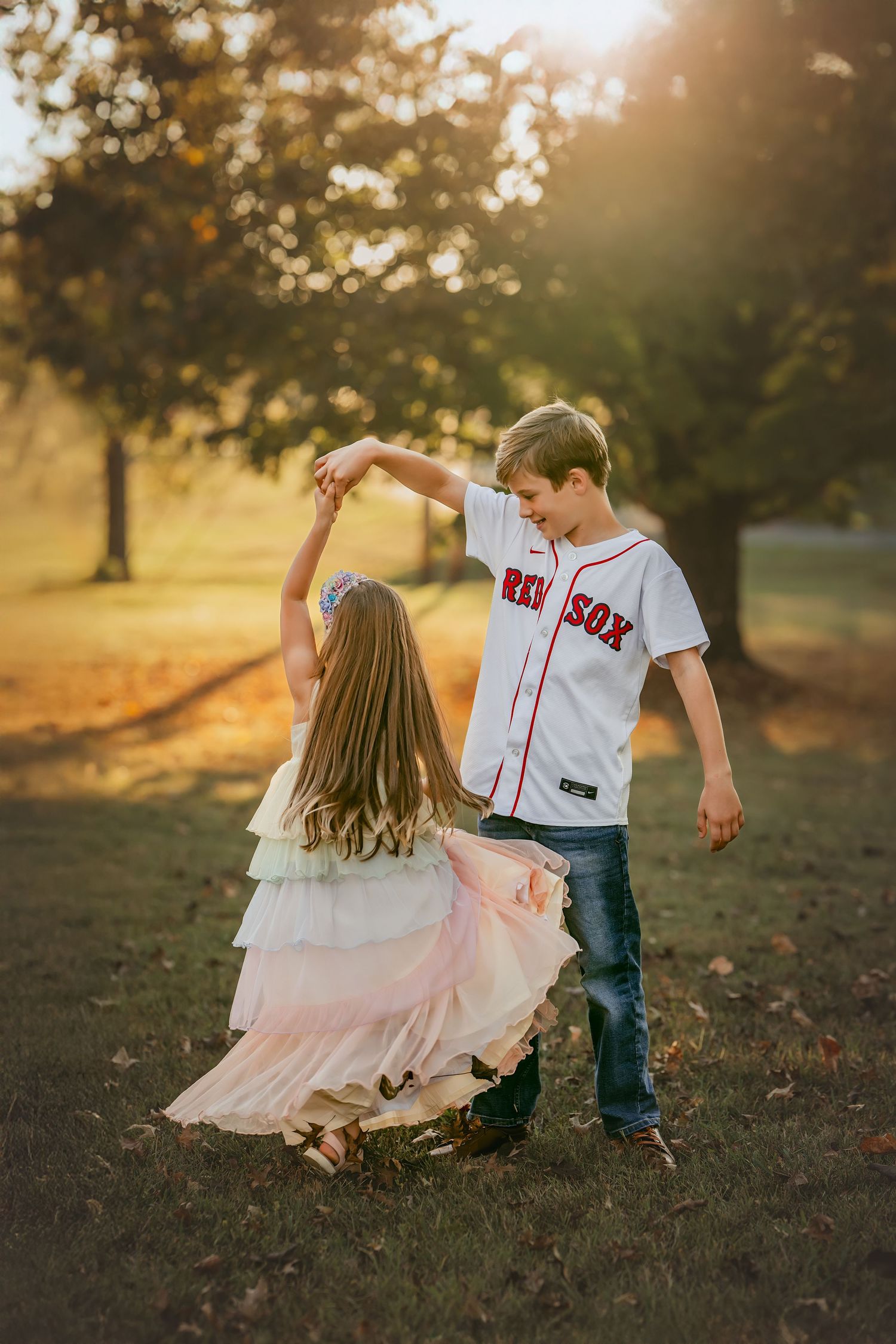
Sometimes the clothing supports an existing idea. Other times, it becomes the idea. A special dress might inspire an imagined story, while a custom baseball jersey could create a portrait centered on a child’s interests and personality. Clothing connected to a family’s culture or heritage may carry even greater meaning and deserve a prominent role in the finished portrait.
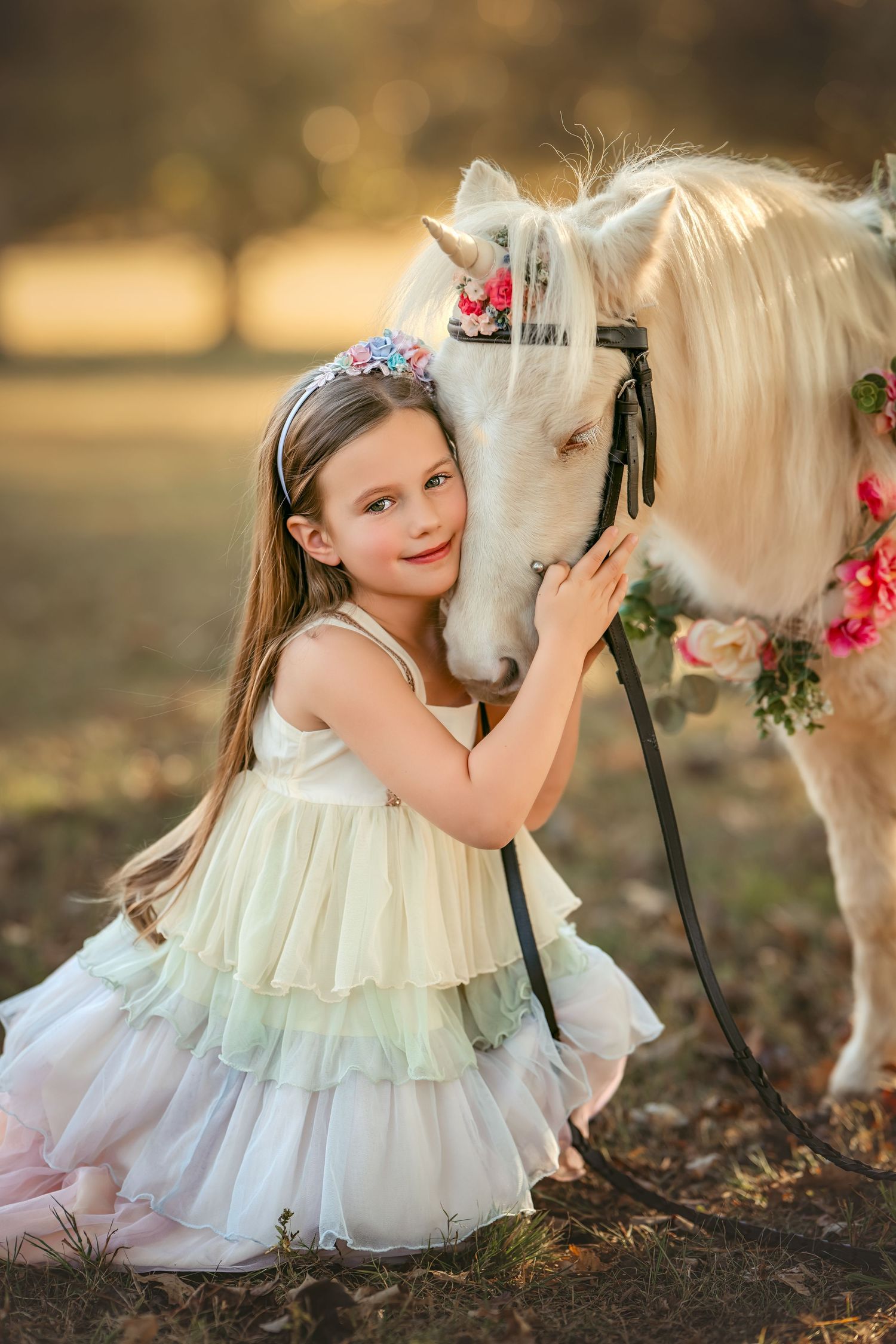
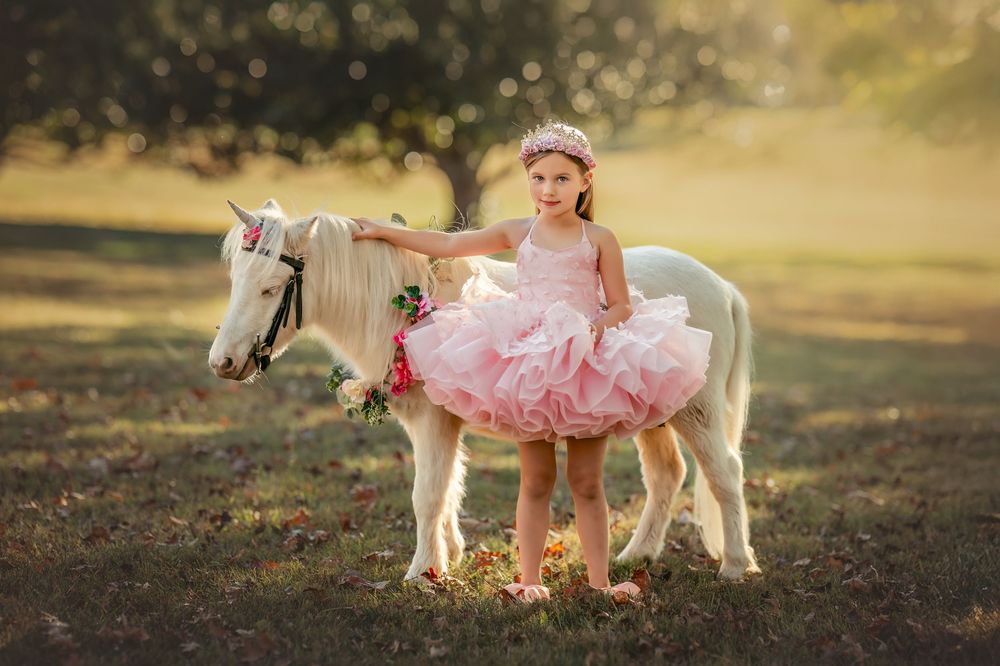
This is why many of the usual wardrobe rules are not absolute. Logos and character graphics can easily pull attention away from the child, but that doesn’t mean popular themes, bold patterns, or current trends have no place in fine art portraiture. It all depends on the execution. A love of unicorns, for example, can be translated through color, texture, light, and a sense of magic without relying on a costume printed with a cartoon character.
Bold or intricately patterned clothing can also work beautifully when the other elements are chosen to support it. A simple background, restrained props, and carefully controlled color allow an important garment to command attention without overwhelming the child wearing it. The goal is not to remove every visually interesting element but to create balance among them.
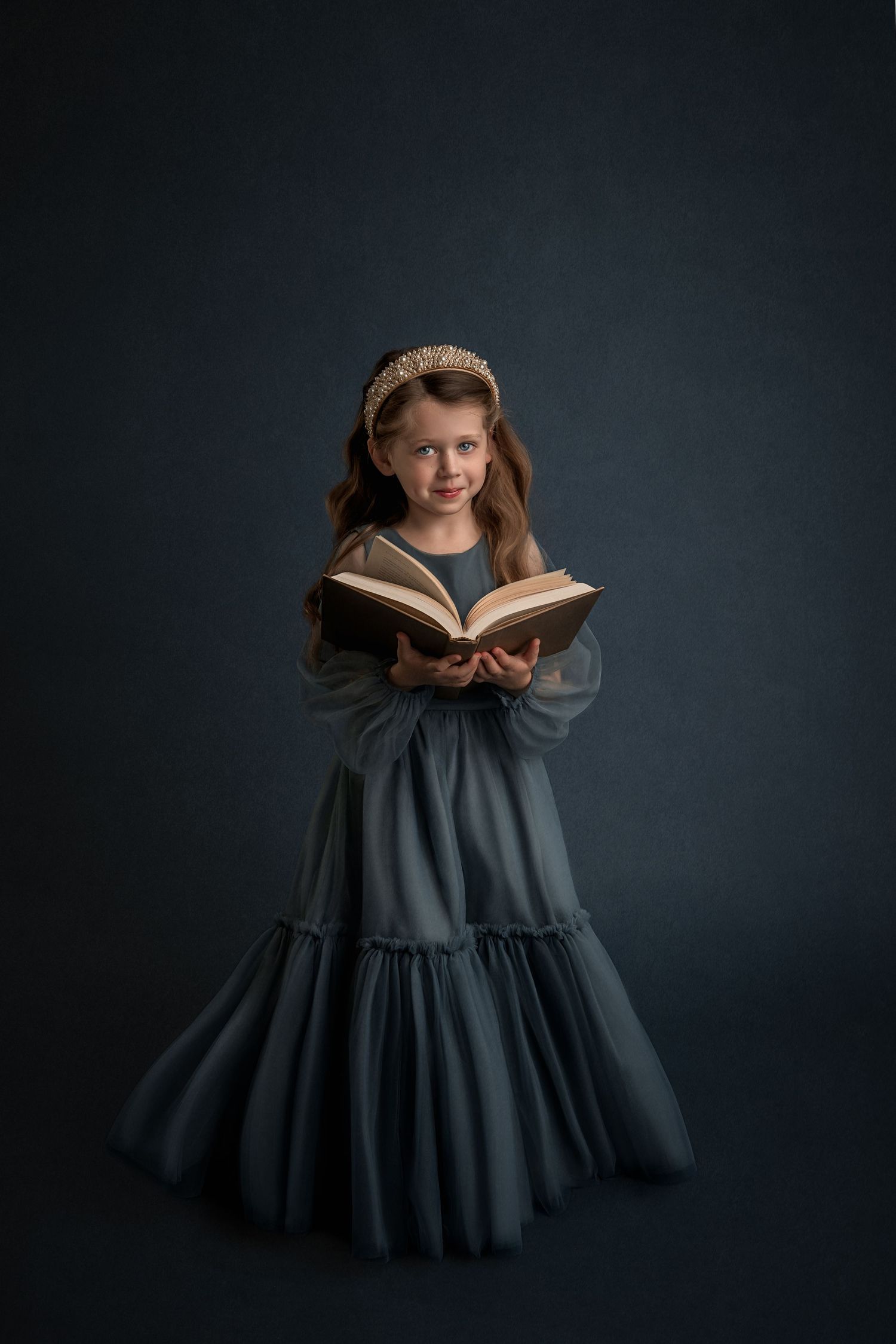
Wardrobe guidance is therefore part of the planning process for every fine art children’s session. I can help families select pieces they already own, find something new, or choose from the dresses available in my client closet. Whether the clothing inspires the portrait or quietly supports the larger idea, it should feel as though it belongs in the image rather than unintentionally drawing attention away from the child.
Posing Should Reveal the Child, Not Overpower Them
Fine art portraiture involves intentional posing, but intentional does not have to mean stiff. The purpose of direction is to create a strong composition while allowing the child’s personality to remain visible. Ideally, the finished portrait feels effortless, even when quite a bit of thought went into creating it.
One of my strengths as a children’s photographer is making that direction feel more like play than posing. Instead of placing a child’s hands precisely and asking them to remain still, I might give them a flower, basket, book, or another object to interact with naturally while I wait for the right moment. If a visible prop would be distracting, even a tiny scrap of paper held between two fingers can give their hands something to do without the child realizing they are “posing.” Games, movement, and simple prompts can guide posture and expression in much the same way.
Patience on my part is equally important. I watch for genuine expressions instead of trying to force the same smile into every portrait. Sometimes that means asking questions while waiting for a flash of delight or mischief. Other times, the expression that best serves the image is calm, curious, or serious. A child does not need to smile—or even necessarily look at the camera—for a portrait to be beautiful. Their quieter expressions deserve to be remembered alongside their laughter and more traditional smiling faces.
Whenever possible, I prepare the light, setting, and composition before asking the child to step into the scene. This lets us create plenty of meaningful options while they are naturally engaged, without boring or exhausting them. The goal is not to mold a child into a perfect pose, but to use thoughtful direction to reveal what is already there.
The Background Supports the Story Without Becoming the Subject
The setting helps establish the color, texture, light, and atmosphere of a portrait, so it should be chosen according to what the original idea needs. I always have my eye out for quiet patches of landscape that offer the right combination of beautiful light and simplicity without competing with the child.
Sometimes the perfect setting is even found in the landscaping around a family’s own home. A small corner of the yard can provide both a beautiful background and a personal connection that a public location could not replicate. What matters is not how impressive the setting appears on its own, but what it contributes to the finished composition.
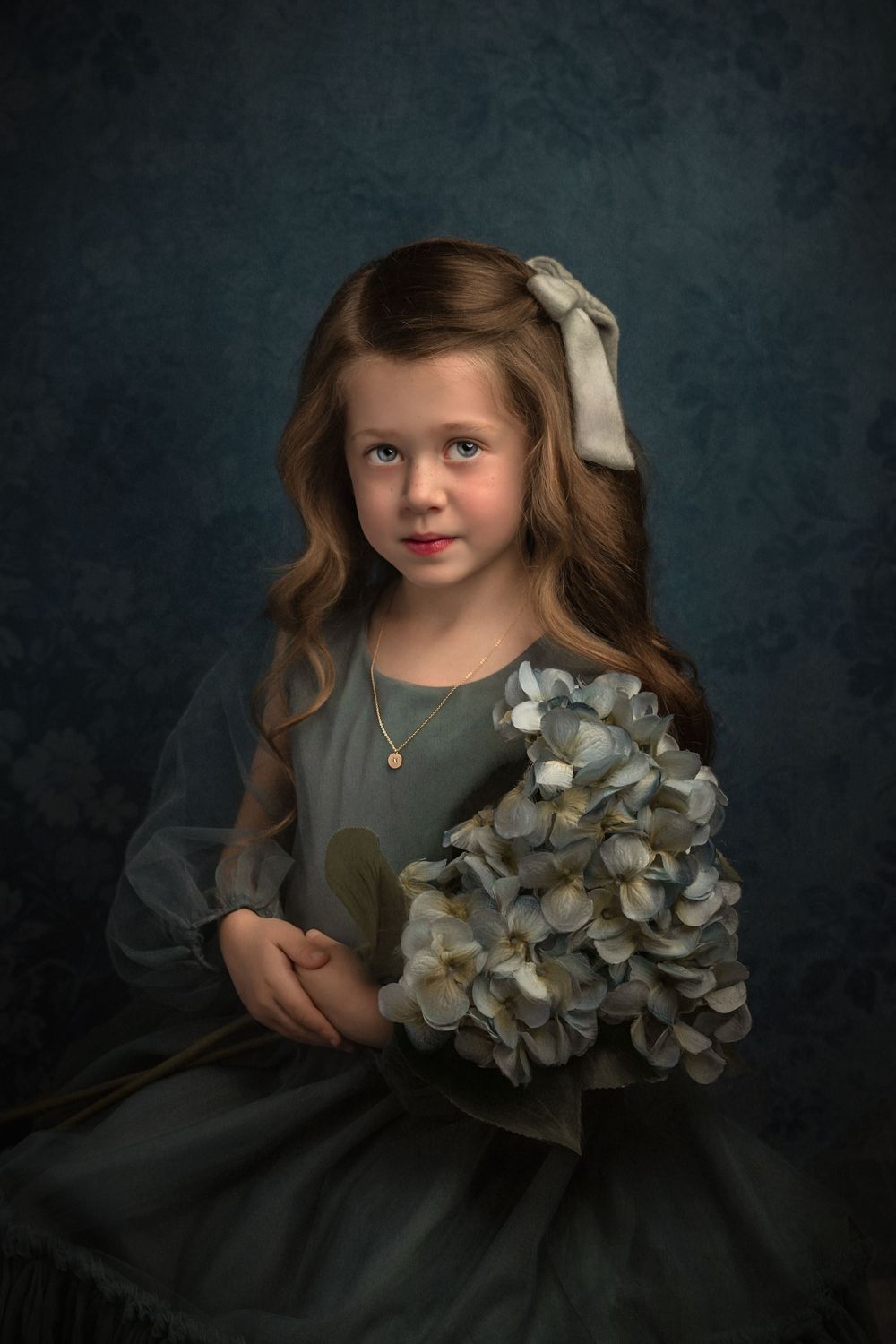
Other portraits are better suited to the control and simplicity of a studio, where the background can recede and allow the lighting, clothing, and expression to carry the image. Choosing between a studio or outdoor setting is not something you’ll have to decide on your own. I help families determine the best option as part of the planning process for each portrait.
Editing Finishes the Portrait; It Shouldn’t Rescue It
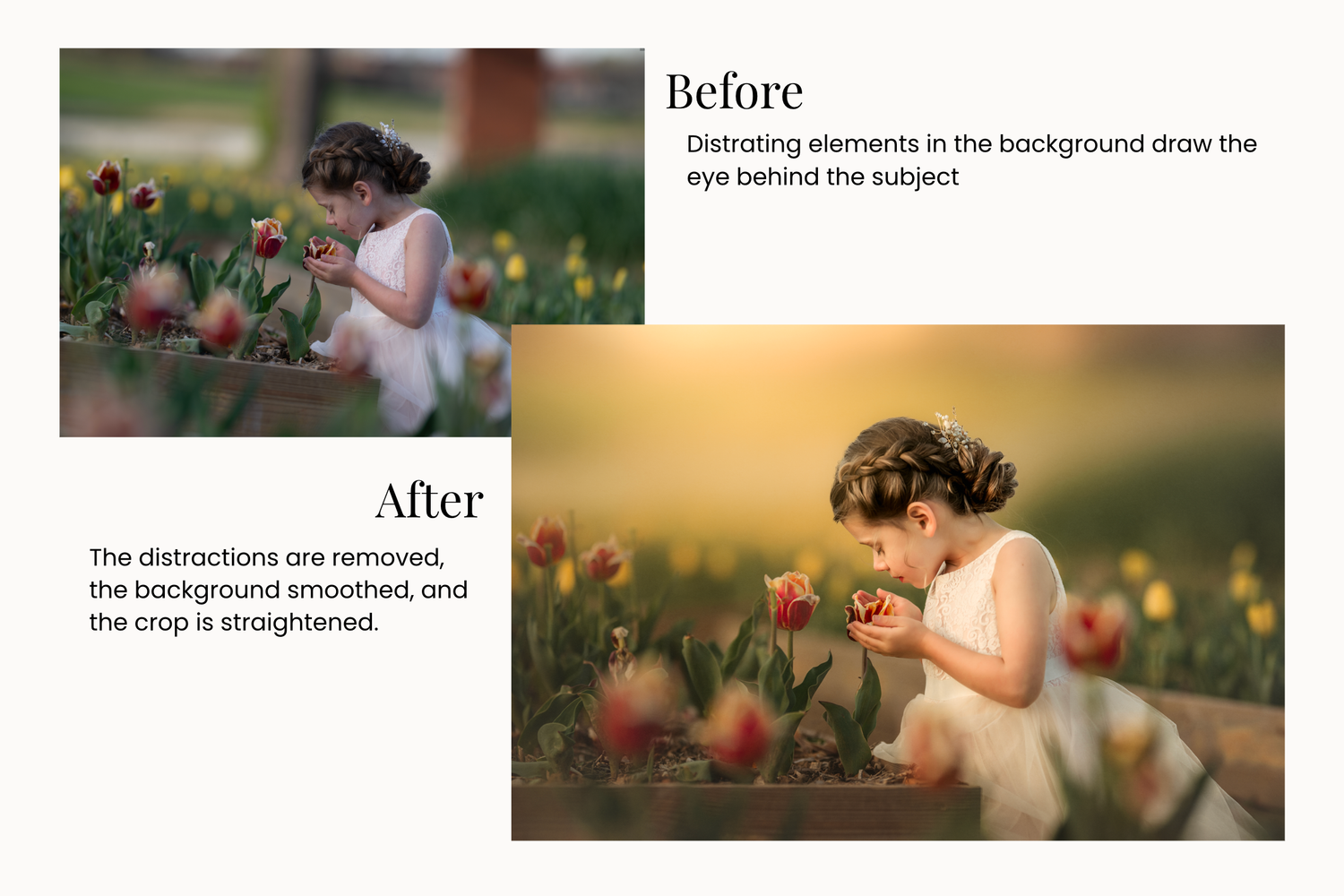
Editing allows me to refine the artistic choices made above and bring the different elements together into a cohesive finished portrait. Some details are corrected while I am photographing, while others, like wayward hairs or distracting background elements, may be refined during editing. I also carefully select the exact moment from a sequence when the movement, expression, and composition come together. When necessary, I may combine elements from multiple frames to create the strongest possible final image.
Color and tone can be refined to strengthen the mood, create depth, and guide the viewer’s eye toward the child. Temporary distractions can be removed, and elements that already exist within the image can be subtly emphasized. When done correctly, these adjustments should feel like a natural extension of the portrait.
The goal is never to transform a child into someone unrecognizable. Skin should still look natural, familiar features should remain, and the finished portrait should still feel truthful to the person in it. Editing can polish and complete the original vision, but the artistry cannot depend on using editing to rescue a photograph that was never thoughtfully created in the first place.
The Presentation Is Part of the Artwork
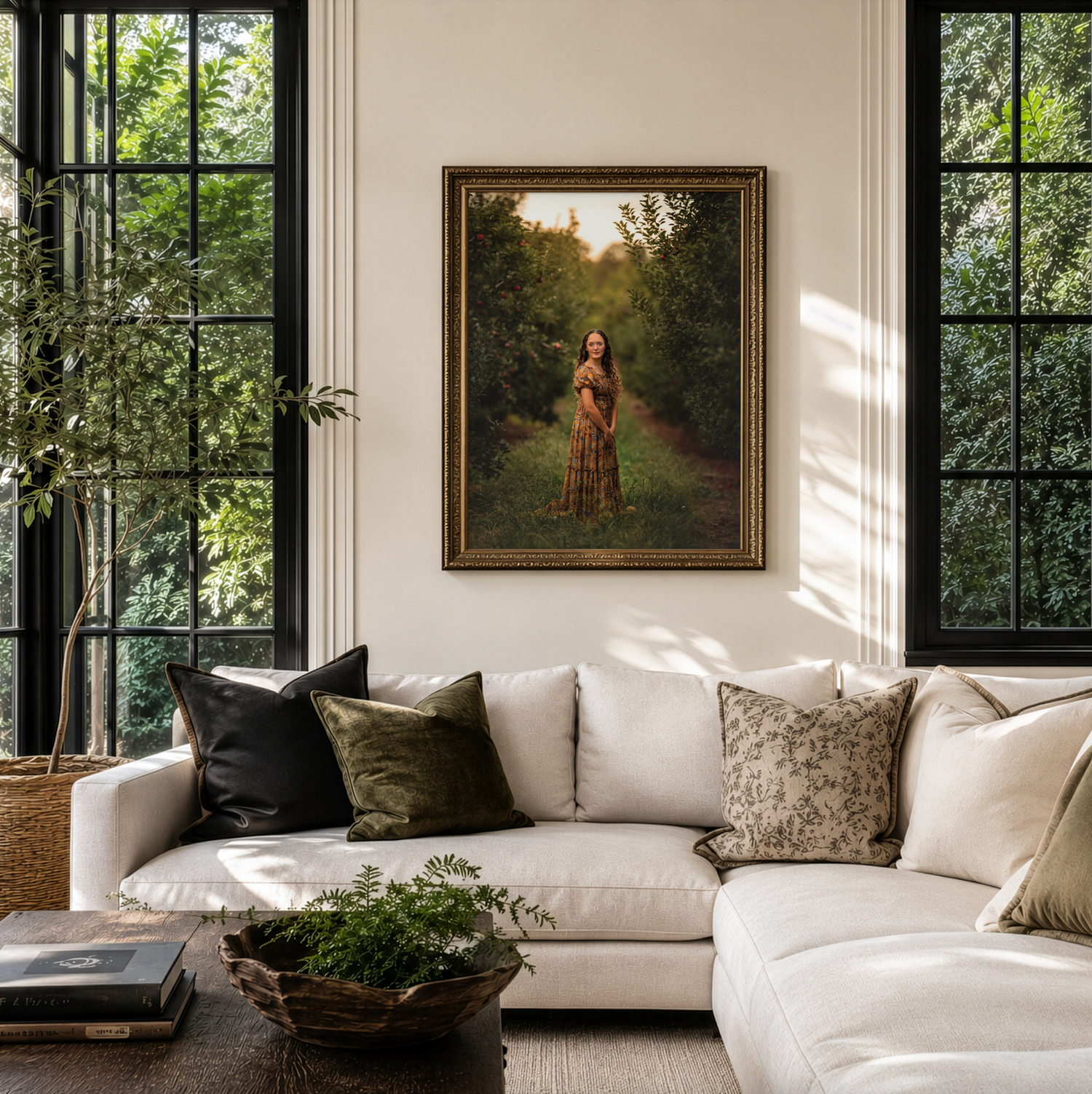
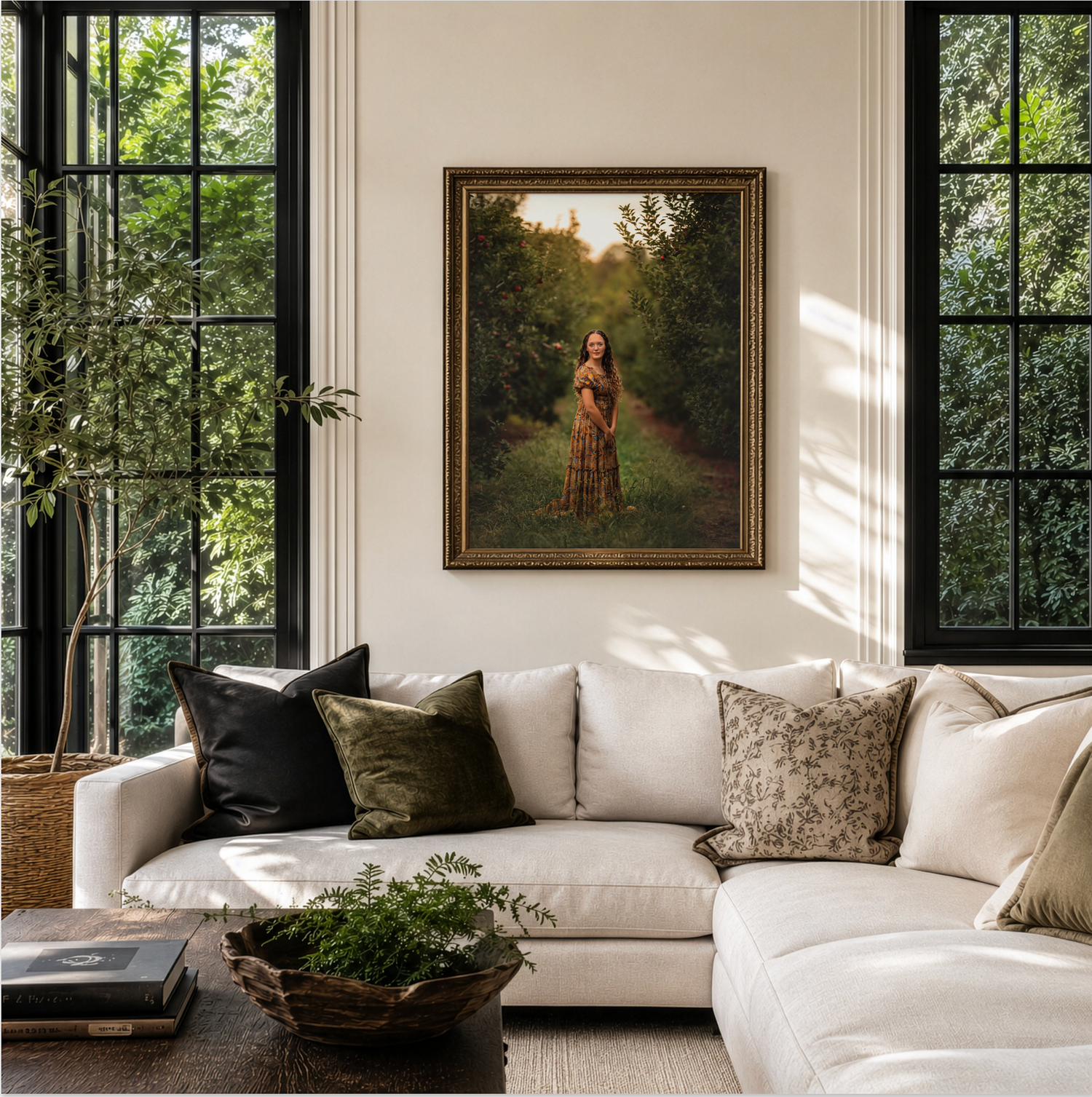
A fine art portrait is created first and foremost for a life outside the screen. The scale, frame, matting, and surface all affect how the image is experienced. One portrait may deserve to stand alone, while several might tell a stronger story when displayed together.
Considering where and how the finished artwork will be displayed can influence many of the decisions we make during planning, from clothing colors to composition and orientation. We may even design the portrait around a particular room so the artwork feels as though it was meant for that space from the start.
But these are not decisions families have to navigate alone. From the initial planning of the portrait to choosing its final size and presentation, I guide the process so the artwork complements both the image and the home where it will be enjoyed. I don’t consider my job complete until your portrait has been personally delivered to your home—and I can even help you hang it.
It All Comes Back to Intention
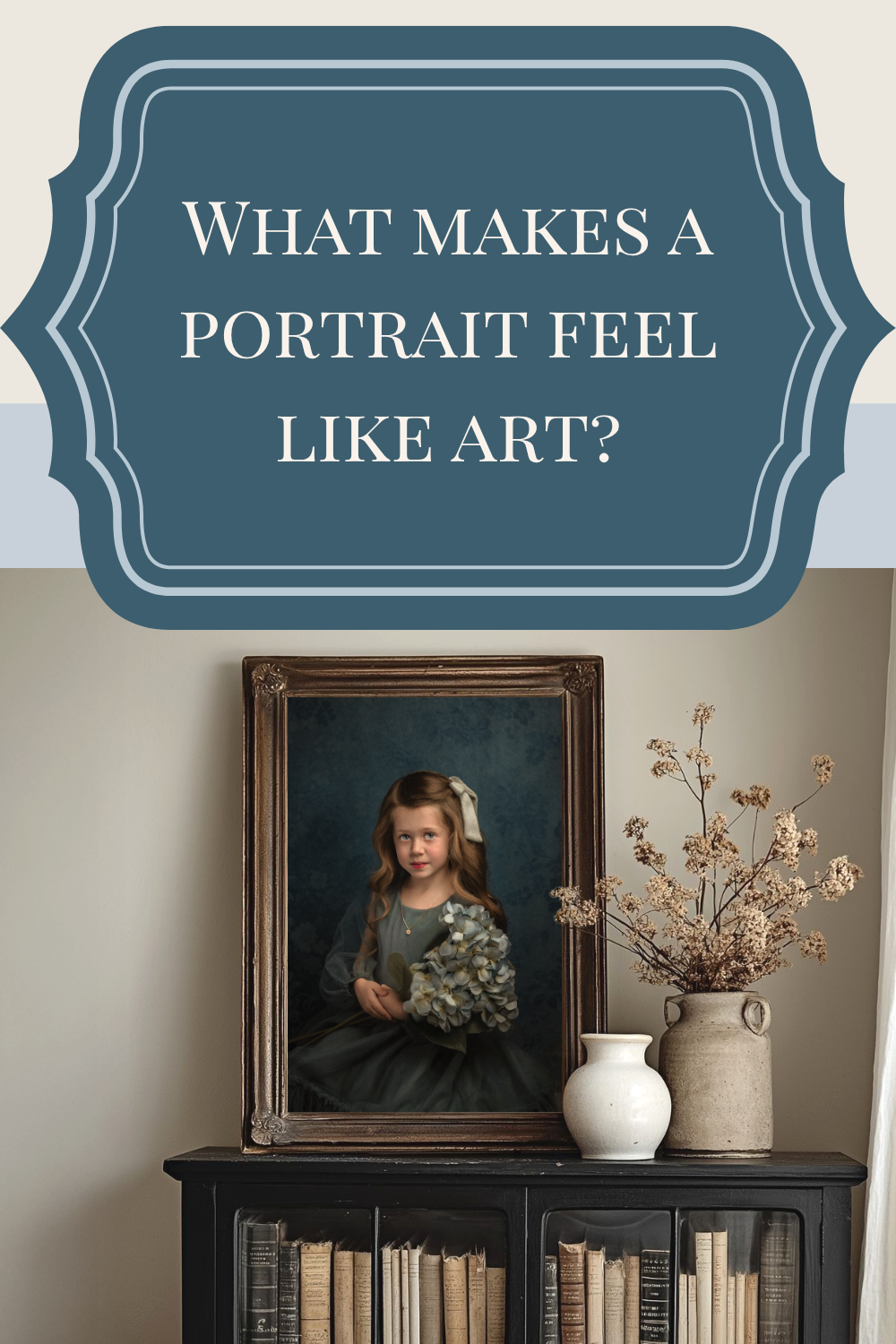
What makes a portrait feel like art? Intention. Every important element within the frame has been deliberately chosen, arranged, and emphasized in service of the child and the portrait as a whole.
That intention appears in details a viewer may not consciously identify but can still feel. Together, those carefully considered choices give the portrait a sense of harmony and purpose—part of what makes it feel like art rather than simply a beautiful photograph.
This is the approach I bring to every fine art children’s portrait I create in Marietta and throughout the Atlanta area. We begin with the child and a simple point of inspiration, then make deliberate choices about the mood, wardrobe, light, setting, composition, and eventual presentation together. There’s no pressure to figure out any of it on your own.
The result is a finished portrait that looks and feels like a work of art—a modern counterpart to the painted portraits families have treasured for generations.
Begin Planning Your Child’s Fine Art Portrait
Tell me a little about your child and what you have in mind—even if your only starting point is simply the desire to create a beautiful portrait. I’ll help you develop the idea, plan every detail, and turn it into finished artwork for your home. Complete the form below to begin.
Interested in a Children's Fine Art Portrait Session?
Check out these helpful links.
Marietta Fine Art Children's Photographer Portfolio
Use this for easy pinning!

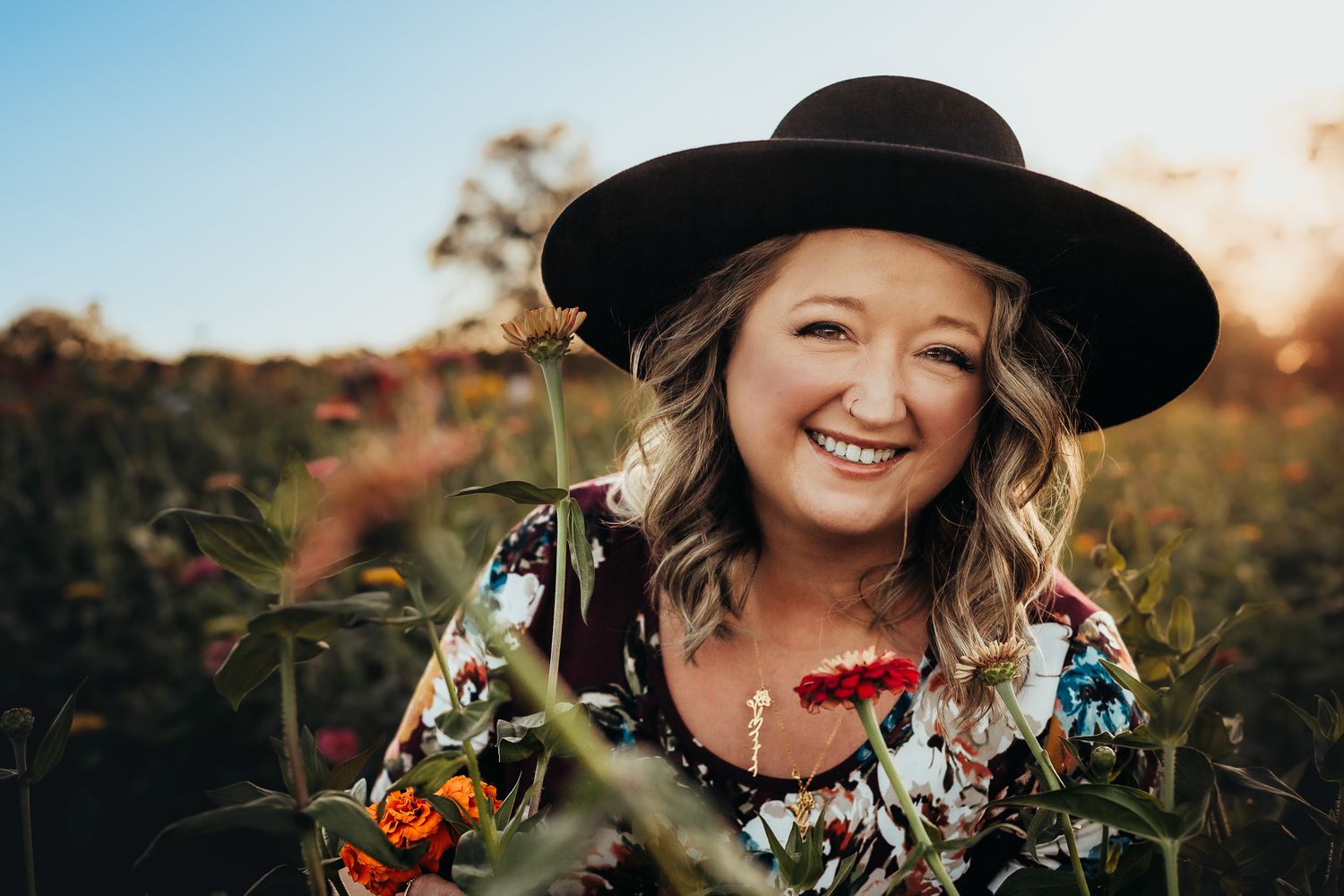
Hi, I'm Christian!
(Michelle is my middle name) I’m a Marietta photographer serving families throughout the Atlanta area. I create beautifully polished portraits through a thoughtfully planned, fully guided experience—from the first conversation to finished artwork made for your home.
If you’re looking for beautiful family photography and an experienced photographer to guide you through the entire process, I’d love to hear from you.
